Where does a 16-ton diesel forklift fit in modern port and container logistics? This guide explains what it can handle, where a reach stacker is the better choice, and how smaller terminals can avoid paying for the wrong machine.
For a small port, inland terminal or independent logistics yard, equipment selection is rarely as simple as “buy the biggest machine available.” A reach stacker may offer impressive container-handling capability, but it also represents a major capital investment. A standard 5-ton forklift may be affordable, but it quickly reaches its limits when heavy machinery, steel products or oversized cargo arrive.
This is where a 16 ton diesel forklift can become useful.
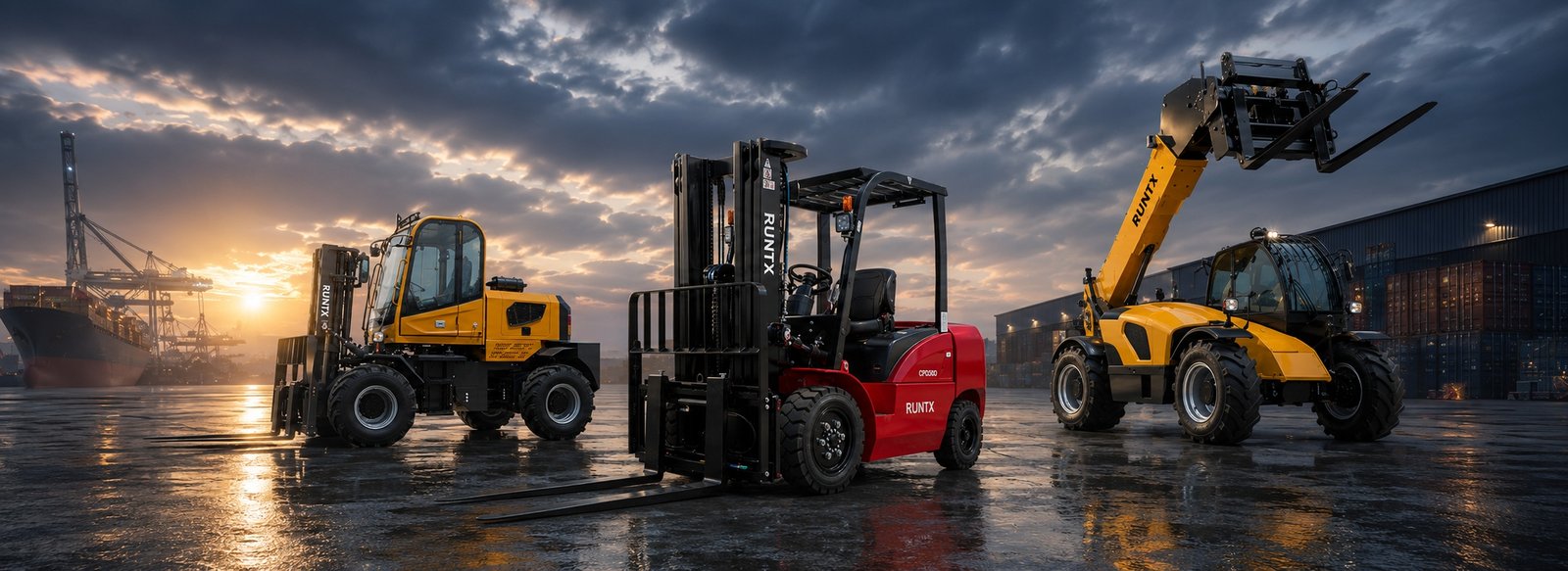
In port operations, a high-capacity forklift often fills the space between ordinary industrial forklifts and dedicated container-handling equipment. It can move heavy breakbulk cargo, industrial machinery, steel products, large pallets and project cargo around a terminal while also supporting container stuffing and destuffing operations.
But there is an important distinction: a 16-ton forklift should not automatically be treated as a replacement for a reach stacker when handling loaded ISO containers.
Rated forklift capacity, load center and attachment configuration must always be checked against the actual cargo. For dedicated lifting and stacking of laden shipping containers, purpose-built container handling equipment is generally the more appropriate solution.
1. Why Ports Need More Than One Type of Material-Handling Machine
Containerized trade continues to place enormous pressure on ports and logistics yards. UN Trade and Development reports that ports worldwide handled approximately 920 million TEU in 2024, representing 6.9% year-on-year growth. Over the previous decade, global container port throughput increased by around 37%.
Source: UN Trade and Development (UNCTAD), Container Port Throughput Data, updated April 2026.
Those numbers explain why container equipment receives so much attention, but containers are only part of many terminals’ daily workload.
Regional ports, project-cargo terminals and industrial wharves may also handle generators, fabricated steel, construction machinery, transformers, oversized pallets and other cargo that does not need a container spreader at all.
For these jobs, a large counterbalance forklift can be much more flexible. The operator can approach cargo directly, pick it with forks or an appropriate attachment, move it around the yard and load or unload trucks without waiting for fixed lifting infrastructure.
2. Where a 16 Ton Diesel Forklift Fits in Container Logistics
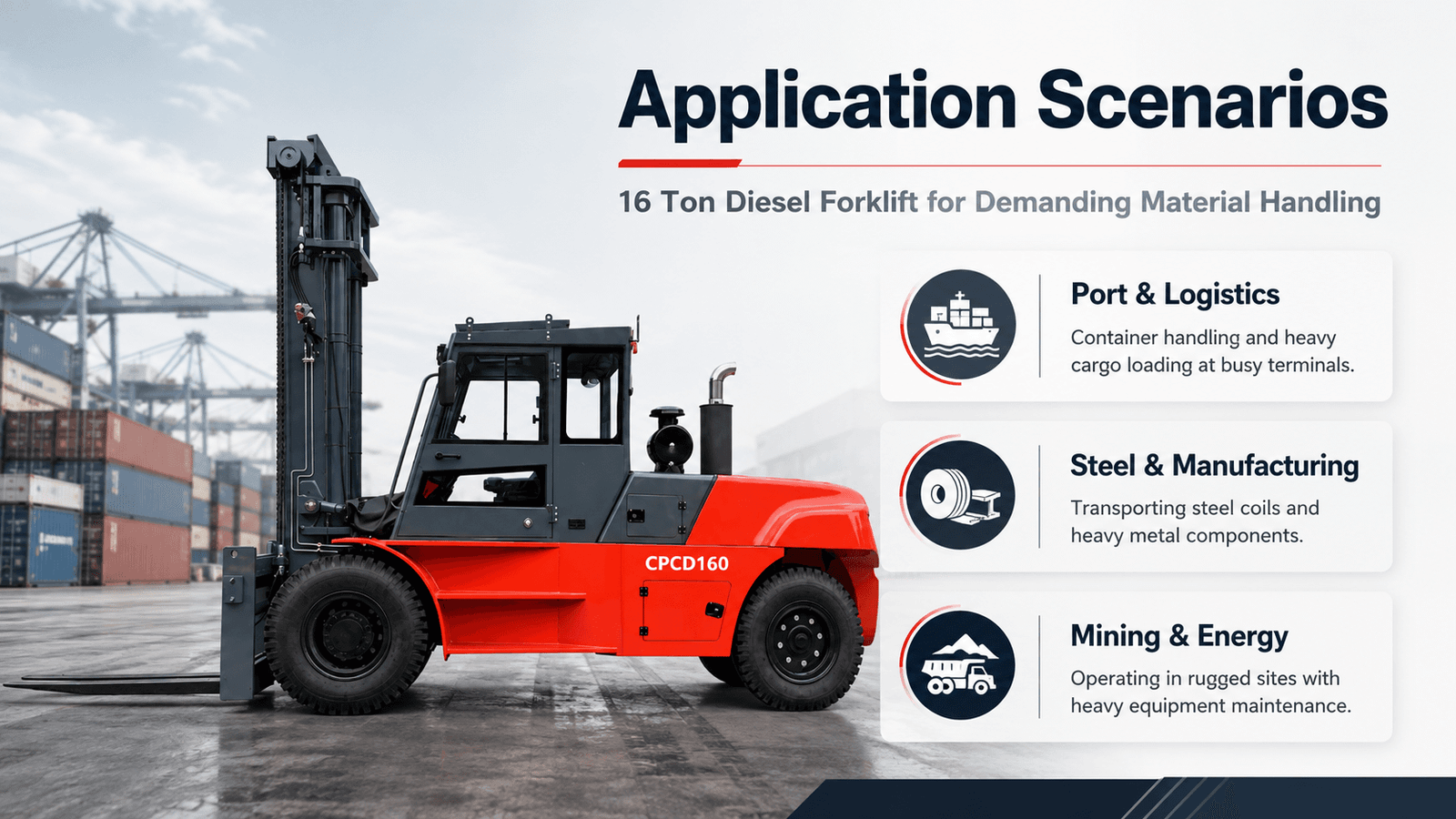
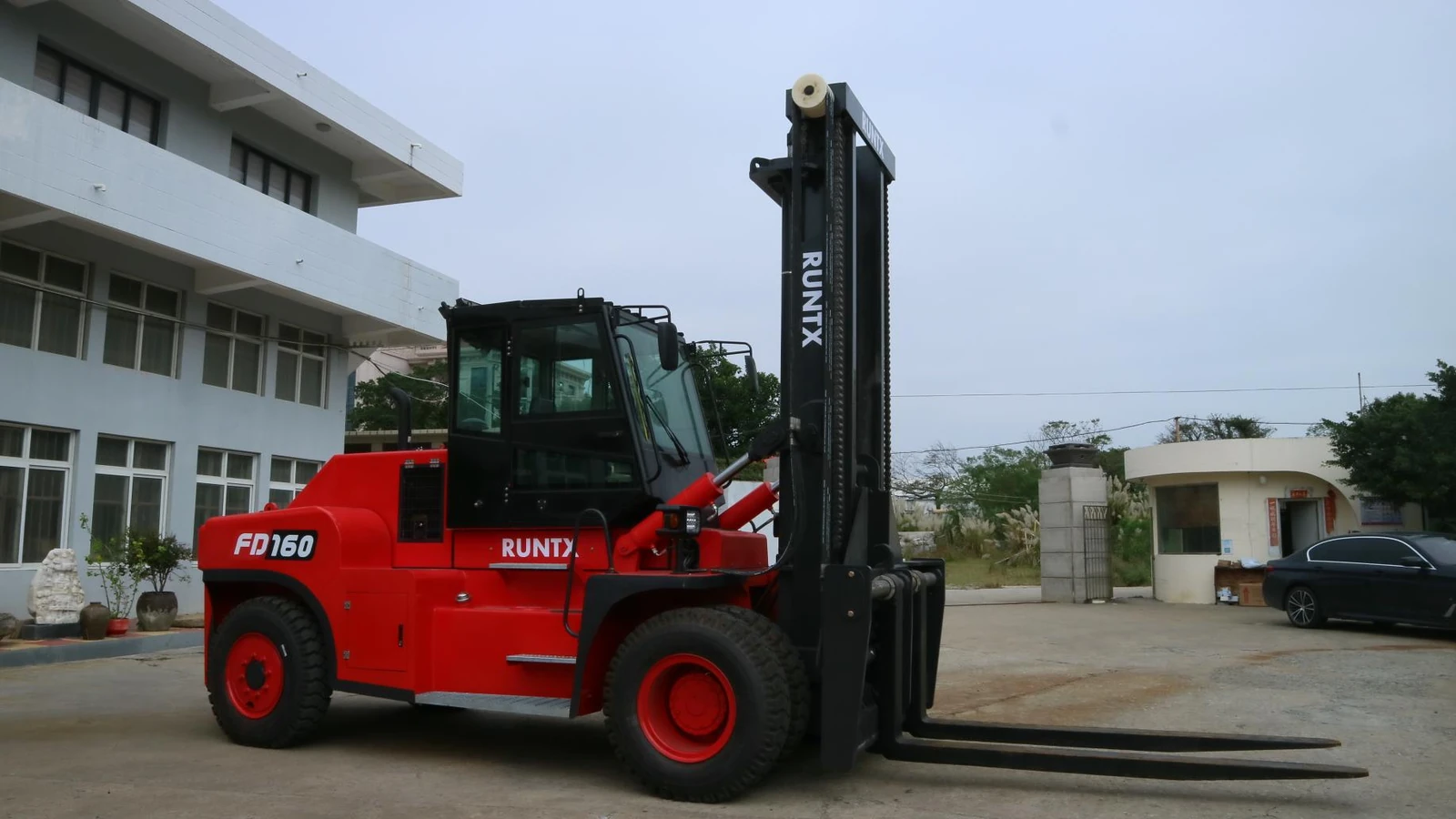
A machine such as the RUNTX CPCD160 16 Ton Heavy-Duty Diesel Forklift is designed for high-capacity industrial handling. RUNTX currently publishes the model with a 16-ton rated capacity and 4,000 mm lifting height, with a reinforced chassis and hydraulic system intended for demanding outdoor work.
In a port environment, the most sensible applications are usually around the container operation rather than replacing specialized container equipment.
A CPCD160 can support heavy cargo transfer between trucks and temporary storage areas, move machinery being prepared for container loading, handle steel or fabricated components arriving as breakbulk cargo and support stuffing or destuffing operations where loads are removed from containers individually.
That versatility is particularly useful at smaller terminals where one machine may need to handle several cargo types in the same shift.
What it should not do is assume that “16 tons” means any container below that gross weight can automatically be picked safely. Container dimensions create a very different load center from a compact industrial load, and attachments can change the truck’s residual capacity substantially.
3. Rated Capacity Is Not the Same as Real Port Capacity
This is one of the most important points for buyers comparing heavy forklifts.
A forklift’s rated capacity is measured under specific conditions. Move the load center forward, install an attachment or handle an unusually long load, and the available capacity can fall.
OSHA provides a straightforward example: a forklift rated for 5,000 lb with standard forks is shown with a rated capacity of 4,500 lb after a sideshifter is installed. That represents a 10% capacity reduction in that particular truck-and-attachment configuration.
Source: U.S. Occupational Safety and Health Administration (OSHA), Powered Industrial Trucks – Nameplate and Attachment Guidance.
The lesson becomes even more important at 16 tons. Port cargo is often long, irregular or carried with specialized attachments. Before ordering, buyers should provide the supplier with the actual cargo dimensions, maximum weight, required fork length and handling method.
The right question is not simply “Can this forklift lift 16 tons?” It is: “What capacity is available with my actual load center and final attachment?”
4. 16 Ton Forklift vs Reach Stacker vs Container Handler
| Equipment | Best Use | Container Role | Small-Terminal Advantage |
|---|---|---|---|
| 16 Ton Diesel Forklift | Heavy machinery, steel, breakbulk and large pallets | Supports stuffing, destuffing and container-adjacent cargo handling | Highly flexible across different cargo types |
| 45 Ton Reach Stacker | Loaded ISO containers | Dedicated lifting, transport and multi-row stacking | Mobile alternative to fixed container cranes |
| Empty Container Handler | High-volume empty-container movements | Fast vertical empty-container stacking | Efficient where empty-container volume is high |
If the main job is handling fully laden containers, a dedicated machine such as the RUNTX RTX450 45 Ton Container Reach Stacker is the more appropriate category. The RTX450 is specifically designed around container handling, using a telescopic boom and spreader rather than conventional forks.
For a terminal handling mixed industrial cargo, however, the CPCD160 can be the more versatile everyday workhorse.
5. Safety and Downtime Have a Direct Financial Cost
Port operators often focus heavily on purchase price, but equipment incidents can quickly erase any savings from buying the wrong machine.
The UK Health and Safety Executive states that lift trucks are involved in approximately one-quarter of all workplace transport accidents. It also reports that vehicle overturns account for nearly one-fifth of workplace transport deaths.
Source: UK Health and Safety Executive (HSE), Managing Lift Trucks and Workplace Transport Overturning Guidance.
U.S. Bureau of Labor Statistics data provides another useful cost perspective. In 2017, forklift-related incidents resulted in 9,050 nonfatal cases involving days away from work, with a median of 13 days away, compared with eight days across all cases.
Source: U.S. Bureau of Labor Statistics, Occupational Injuries, Illnesses, and Fatalities Involving Forklifts.
For a small port or contractor with only one heavy forklift, losing the machine or an operator for days can be much more damaging than it is for a large terminal with backup equipment.
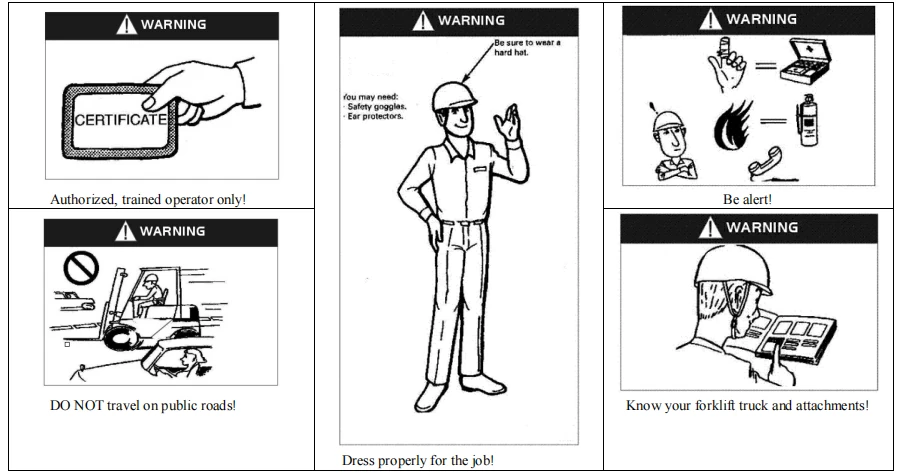
That is why tire selection, visibility, brakes, lighting, yard condition and operator training should be treated as ROI factors, not simply safety-box items.
6. Container Weight Must Be Verified, Not Estimated
Container-related work introduces another important issue: actual gross weight.
The International Maritime Organization requires the verified gross mass of a packed container before it is loaded onto a vessel under SOLAS rules. The requirement exists because incorrectly declared container weight can contribute to unsafe stacking, cargo damage and risks to shore-side workers.
Source: International Maritime Organization (IMO), SOLAS Verified Gross Mass requirements.
That principle also makes sense on the terminal floor. Operators should never guess the weight of a container or heavy project load based on appearance.
If a CPCD160 is being considered for any container-related task, the actual weight, load center, lifting method and attachment must be confirmed before the lift. If the job involves routine handling of loaded containers, the operation should move toward dedicated container-handling equipment instead.
Not Sure Whether You Need a 16 Ton Forklift or a Reach Stacker?
Send RUNTX your cargo weight, dimensions, container mix, lifting method and yard layout. We can help compare a heavy-duty forklift configuration with dedicated port machinery before you invest in equipment that is too small—or unnecessarily large.
7. When Does a 16 Ton Forklift Make Better Financial Sense?
A smaller terminal should evaluate equipment according to actual cargo mix, not simply port size.
If most daily work consists of loaded ISO containers, specialized port machinery is easier to justify. But if the terminal handles containers alongside machinery, steel, construction materials and other breakbulk cargo, a heavy-duty forklift can offer better utilization because it is not tied to one cargo type.
This matters to smaller operators because utilization drives payback. A cheaper machine that sits idle is not necessarily a better investment, and an expensive reach stacker used only occasionally may also be difficult to justify.
A CPCD160 can make sense when loads regularly exceed the practical range of 5–10 ton forklifts but remain within a properly verified 16-ton configuration, particularly where the same machine must serve truck loading, yard transfer and heavy industrial cargo handling.
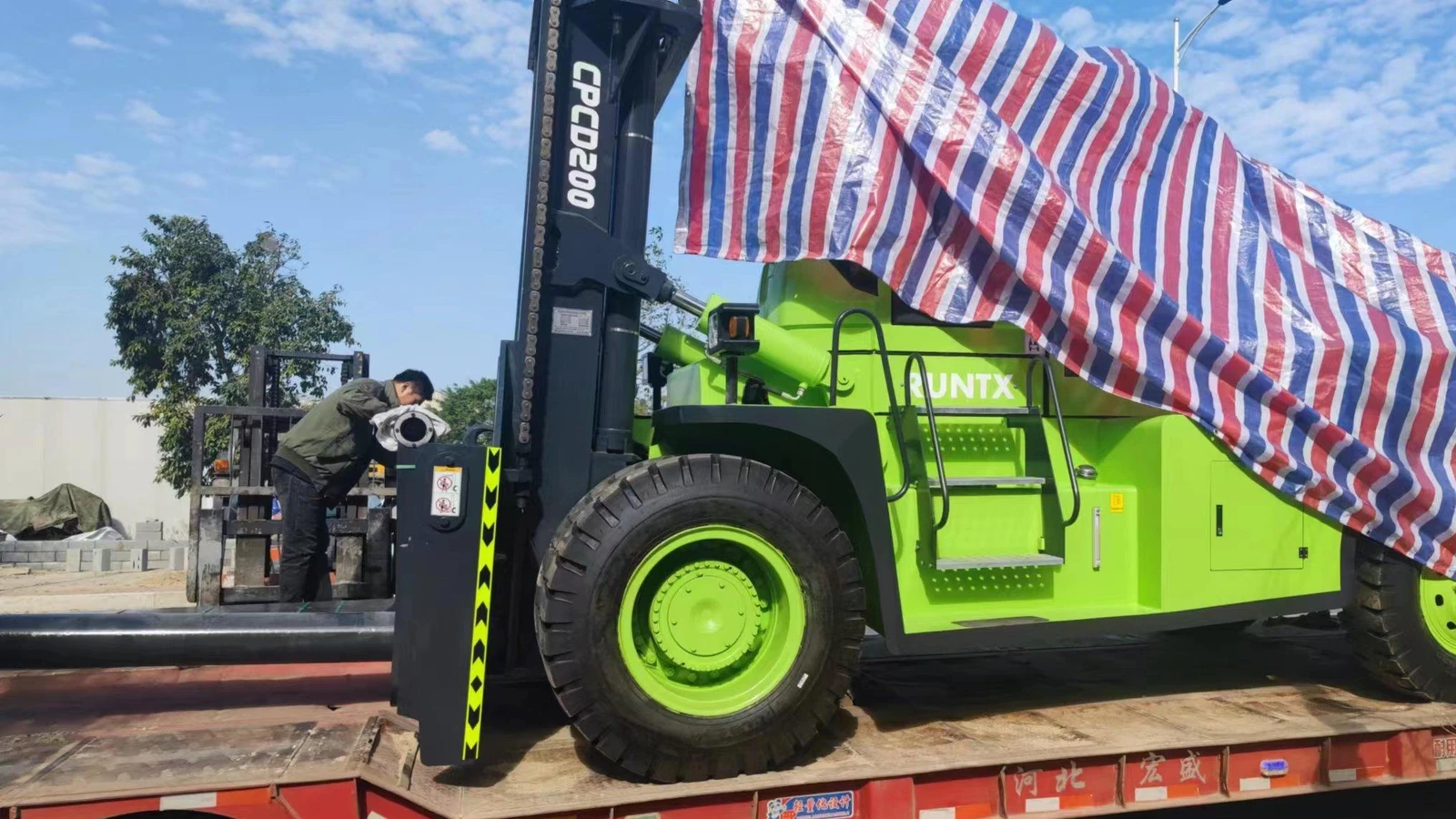
If typical loads regularly move beyond that range, buyers can also compare the RUNTX CPCD200 20 Ton Heavy-Duty Diesel Forklift before moving into a completely different equipment category.
8. Factory-Direct Procurement for Smaller Port Operators
Heavy port equipment is often associated with large fleet tenders, but smaller buyers do not always need ten machines.
RUNTX supports 1 Unit MOQ for suitable heavy-duty forklift orders, allowing regional terminals, contractors and industrial yards to purchase a single machine at factory-direct pricing.
OEM/ODM options can include body color, branding, forks, mast configuration, attachments, tires and other project-specific requirements. For distributors or rental fleets, mixed-model and small-batch orders can also be discussed according to market demand.
International shipping is another area where smaller buyers often need support. RUNTX can assist with export documentation, commercial invoices, packing lists, bills of lading and shipping coordination, including discussions around containerized transport, flat-rack or Ro-Ro options depending on machine dimensions and destination.
That reduces one of the biggest barriers for a first-time importer: buying the correct equipment is only half the job; getting it to the destination in a workable and documented condition matters just as much.
Frequently Asked Questions
Can a 16 ton forklift lift a shipping container?
It depends on the verified container weight, load center, attachment and manufacturer-approved capacity chart. A 16-ton rated forklift should not be assumed suitable for routine lifting of loaded ISO containers. Dedicated reach stackers or container handlers are generally the better choice for that job.
What is a 16 ton forklift best used for in a port?
Typical applications include machinery, steel, breakbulk cargo, heavy pallets, project cargo and supporting container stuffing or destuffing operations.
Why choose a diesel forklift for port work?
Diesel forklifts are well suited to long outdoor duty cycles, heavy loads and operations where quick refueling and continuous availability are important. Local emissions rules should still be checked before purchasing.
Should I buy a 16 ton forklift or a reach stacker?
Choose according to cargo mix. A 16-ton forklift offers greater flexibility across different heavy loads. A reach stacker is purpose-built for loaded container lifting and stacking.
Can I buy only one RUNTX CPCD160?
Yes. RUNTX supports single-unit purchasing for suitable orders, as well as small-batch and OEM/ODM procurement for distributors and fleet operators.
Final Takeaway: Match the Machine to the Cargo, Not the Port Name
A 16-ton diesel forklift can be extremely useful in port logistics, but its value comes from flexibility—not from pretending it is a smaller reach stacker.
For terminals handling machinery, steel, project cargo and container-related freight, a machine such as the CPCD160 can cover a wide range of heavy handling jobs with one mobile platform.
For regular laden-container stacking, dedicated container equipment remains the better tool.
For a smaller operator, getting this distinction right can prevent overspending, reduce safety risk and improve the number of productive hours the machine delivers each year.
Choose the Right Heavy-Lift Equipment for Your Port
Need one 16-ton forklift for breakbulk cargo, or a reach stacker for loaded containers? Send us your cargo weight, dimensions and yard conditions. RUNTX can prepare a factory-direct equipment recommendation and technical quotation around your real operation.