A new 5,000-unit industrial truck agreement between Jungheinrich and Kuehne+Nagel shows how large logistics fleets are moving beyond simple equipment purchasing toward rental, digital fleet management and scalable material-handling systems.
One of the biggest material-handling deals announced in Europe this autumn is not really about selling forklifts.
Jungheinrich and global logistics company Kuehne+Nagel have signed a multi-year framework agreement covering approximately 5,000 industrial trucks across several European countries.
The number alone is enough to attract attention. In fact, industry platform Forkliftaction ranked the story as its most-read news item of the week at the beginning of October.
But the more interesting part of the agreement is how those 5,000 machines will be managed.
Instead of a traditional one-time purchase, the deal is built around a long-term rental and service model using centralized fleet management. The planned fleet is expected to include several types of material-handling equipment, including forklifts, reach trucks and pallet trucks, with lithium-ion-powered equipment playing an important role.
Source: Jungheinrich corporate announcement and Forkliftaction industry coverage, September–October 2026.
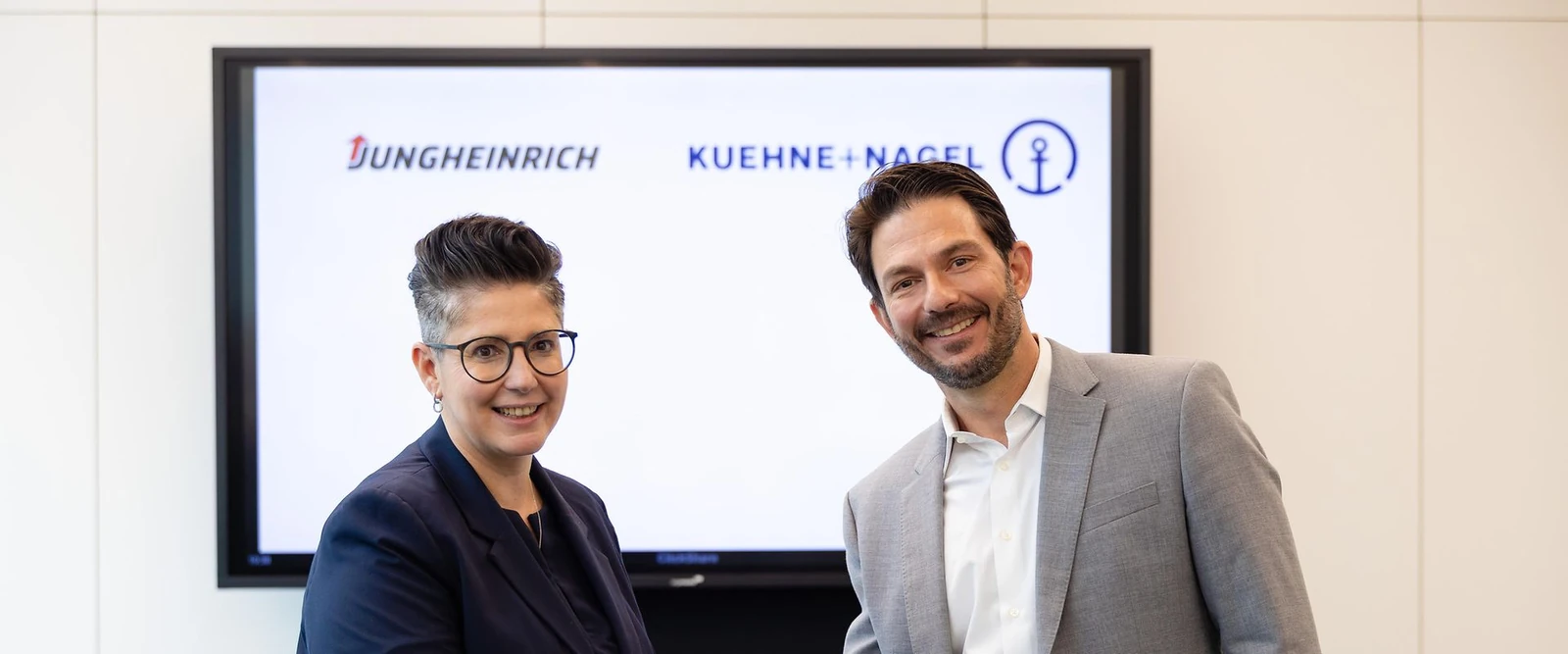
Image source: Official press materials from Jungheinrich and Kuehne+Nagel
The Bigger Story Is Fleet Flexibility
For a company the size of Kuehne+Nagel, buying thousands of machines outright is not necessarily the most efficient way to manage material-handling capacity.
Warehouse demand changes. New contracts start, existing contracts end, peak seasons create temporary demand, and different facilities may require very different equipment mixes.
That is why the framework agreement combines a core fleet with rental capacity that can be scaled according to operational demand.
This matters because it reflects a wider shift in forklift procurement. Large operators are increasingly looking at the machine as part of a complete operating system rather than as a stand-alone asset.
The questions are becoming:
How many machines are actually being used? Which sites are under- or over-equipped? How much downtime is each truck generating? And can the fleet expand without forcing the company to permanently own equipment it only needs during peak periods?
That is very different from simply negotiating the lowest purchase price per forklift.
Lithium-Ion Is Becoming Part of the Fleet Strategy
Jungheinrich says the vehicles covered by the agreement will include energy-efficient equipment using lithium-ion technology, with the company emphasizing short charging times, high equipment availability and maintenance-free battery systems.
The timing is interesting because electrification is accelerating across the wider forklift market.
HELI, another major industrial vehicle manufacturer, reported this week that its electric forklift sales increased 33% year over year in the first half of 2026. Electric models represented 74% of the company’s total unit sales during the period.
Source: HELI H1 2026 financial results reported by Forkliftaction, October 2026.
That does not mean diesel forklifts are disappearing. Heavy outdoor work, construction materials, ports and some developing markets still depend heavily on internal-combustion equipment.
What is changing is the warehouse and logistics side of the market. Where charging infrastructure, shift patterns and indoor operating conditions make sense, electric equipment is becoming the default choice much more often than it was a decade ago.
Why Smaller Fleets Should Pay Attention
A 5,000-truck contract may sound irrelevant to a warehouse that owns only three forklifts, but the underlying logic scales down surprisingly well.
A small fleet also suffers when the wrong machine is purchased.
If a warehouse buys five identical forklifts because that configuration received the best unit price, but two of them spend most of the week parked, the business has not really saved money.
The same applies to a rental company carrying too many machines in one capacity class or a distributor stocking models that local customers rarely request.
This is one reason mixed fleets are becoming more important. A business may need counterbalance forklifts for truck loading, reach trucks for racking, pallet trucks for horizontal movement and stackers for lighter warehouse work.
For smaller buyers, the lesson from this deal is not that everyone should switch to rental. It is that fleet utilization should come before fleet size.
Digital Fleet Management Is Moving Closer to the Machine
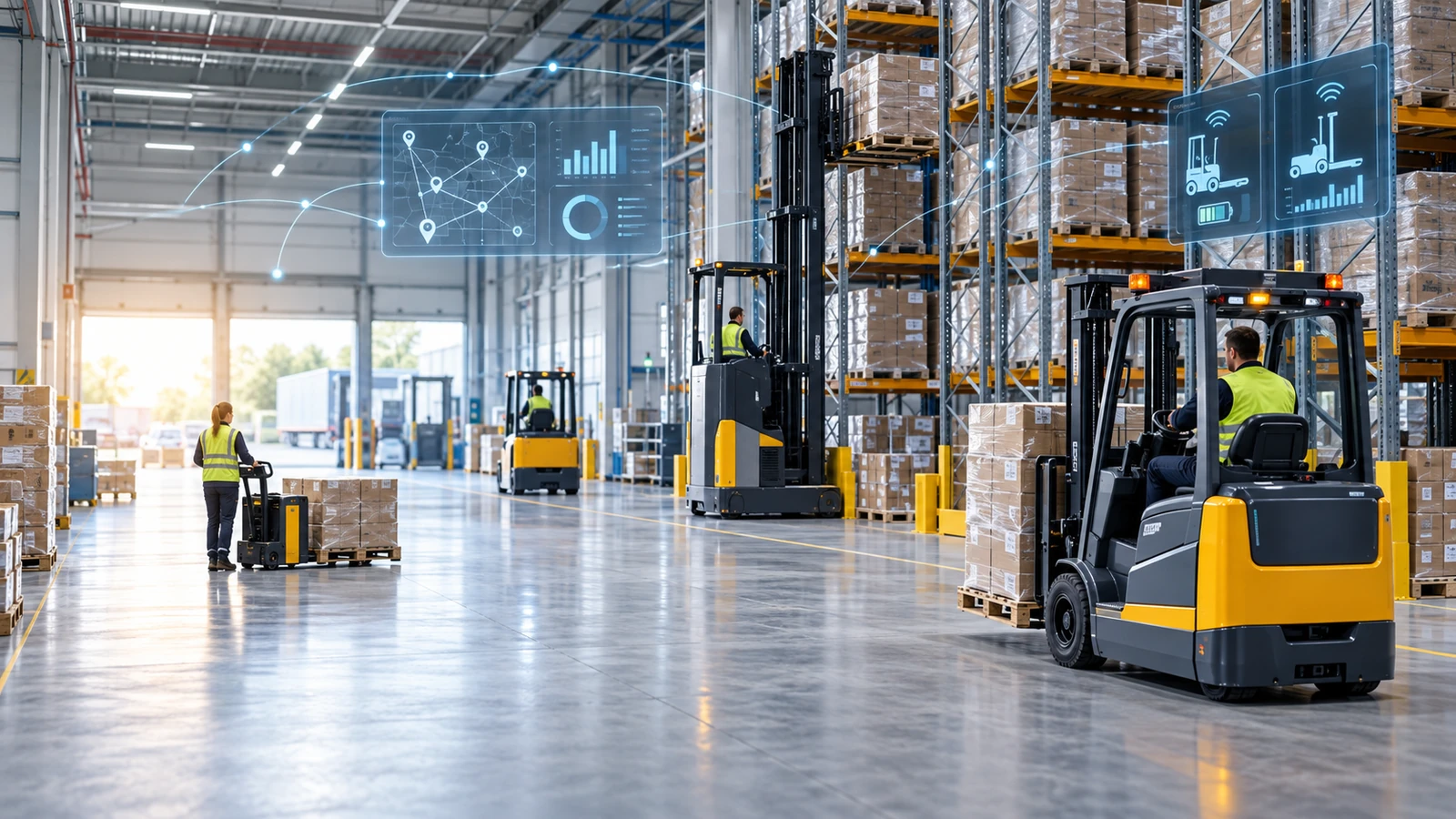
Another important part of the agreement is centralized digital fleet control.
Large logistics groups operate equipment across dozens or hundreds of sites. Without reliable data, it becomes difficult to know whether every forklift is actually necessary.
Fleet systems can help operators monitor utilization, equipment allocation and service requirements across different locations.
This direction fits a broader industry trend. Forklifts are gradually becoming connected assets rather than isolated machines. Telematics, lithium battery monitoring, access control and maintenance data are increasingly being integrated into warehouse and fleet management systems.
For distributors, this changes what customers may expect in the future. Selling the machine may increasingly be only the first part of the relationship. Parts, service, battery support and equipment management can become just as important as the original transaction.
What This Trend Means for Forklift Buyers
Whether you manage 5 forklifts or 5,000, the same principle applies: match the fleet to the workload. Capacity, power type, charging strategy, utilization and service support should be considered together rather than treating every forklift purchase as a separate decision.
The Forklift Market Is Moving Toward “Equipment + Service”
The Jungheinrich–Kuehne+Nagel agreement also highlights something that equipment manufacturers and dealers cannot ignore.
Customers increasingly expect suppliers to help manage what happens after delivery.
For a multinational logistics company, that may mean centralized rental fleet management across Europe. For a small distributor, it may simply mean reliable spare-parts supply and technical support. For an independent warehouse owner, it could mean getting help choosing the correct battery, mast or attachment before the machine is shipped.
The scale is different, but the buyer expectation is similar.
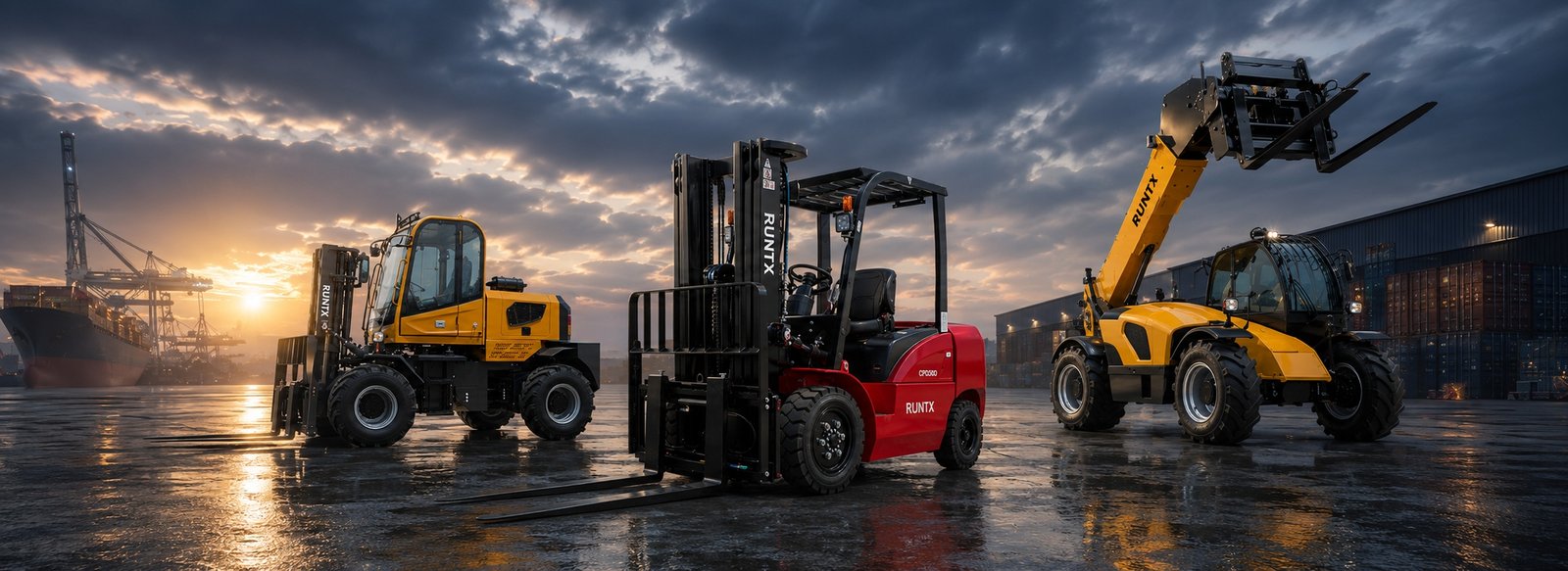
At RUNTX, we see the same change among international buyers. Some customers still purchase a single forklift and handle everything locally. Others increasingly ask for mixed-capacity fleets, OEM branding, spare-parts packages and shipping support as part of one project.
For smaller businesses, this does not mean copying a 5,000-unit European logistics fleet. It means borrowing the part of the strategy that makes sense: buy equipment around actual utilization, not just around the lowest unit price.
A Sign of Where Material Handling Is Heading
Around 5,000 industrial vehicles is a major contract by any standard, but its significance goes beyond volume.
It combines lithium-ion equipment, long-term rental, service support and centralized fleet management under one framework. That points toward a material-handling market where operational flexibility is becoming just as important as the forklift itself.
For global logistics companies, that means managing thousands of vehicles more intelligently.
For smaller operators, it may simply mean asking a better question before buying the next truck:
Will this machine actually be used enough to justify owning it?