Lithium-ion batteries charge faster and require less routine maintenance, but that does not automatically make them the best choice for every warehouse. For many single-shift operations, a well-maintained lead-acid battery can still offer better upfront economics.
When buyers compare two electric forklifts with the same lifting capacity, they often focus on the truck first and the battery second.
In daily warehouse operation, that order should probably be reversed.
The battery determines how long the forklift can work before charging, how much time the truck spends out of service, what charging infrastructure the warehouse needs and how much attention the battery requires over its service life.
That is why the choice between a lithium-ion forklift battery and a lead-acid forklift battery is not simply a technology question. It is an operating-cost question.
For a small warehouse running one shift per day, paying more for lithium may take years to recover. For a distribution center operating two or three shifts with limited charging windows, the same lithium battery may solve an expensive uptime problem almost immediately.
The right answer depends less on which battery is newer and more on how the forklift will actually be used.
The Short Answer: Which Forklift Battery Is Better?
For most buyers:
Lithium-ion is usually the stronger choice for multi-shift, high-utilization warehouses where fast charging, opportunity charging and reduced battery maintenance have measurable operational value.
Lead-acid can still be the more economical choice for lower-utilization or single-shift operations where the battery has enough time to recharge overnight and the business is more sensitive to initial purchase cost.
That distinction matters because lithium is often sold around its technical advantages while lead-acid is discussed only as an older technology.
In practice, an inexpensive technology that comfortably covers the required shift can still be a very good business decision.
Charging Time Is Where Lithium Changes the Workflow
This is usually the biggest operational difference.
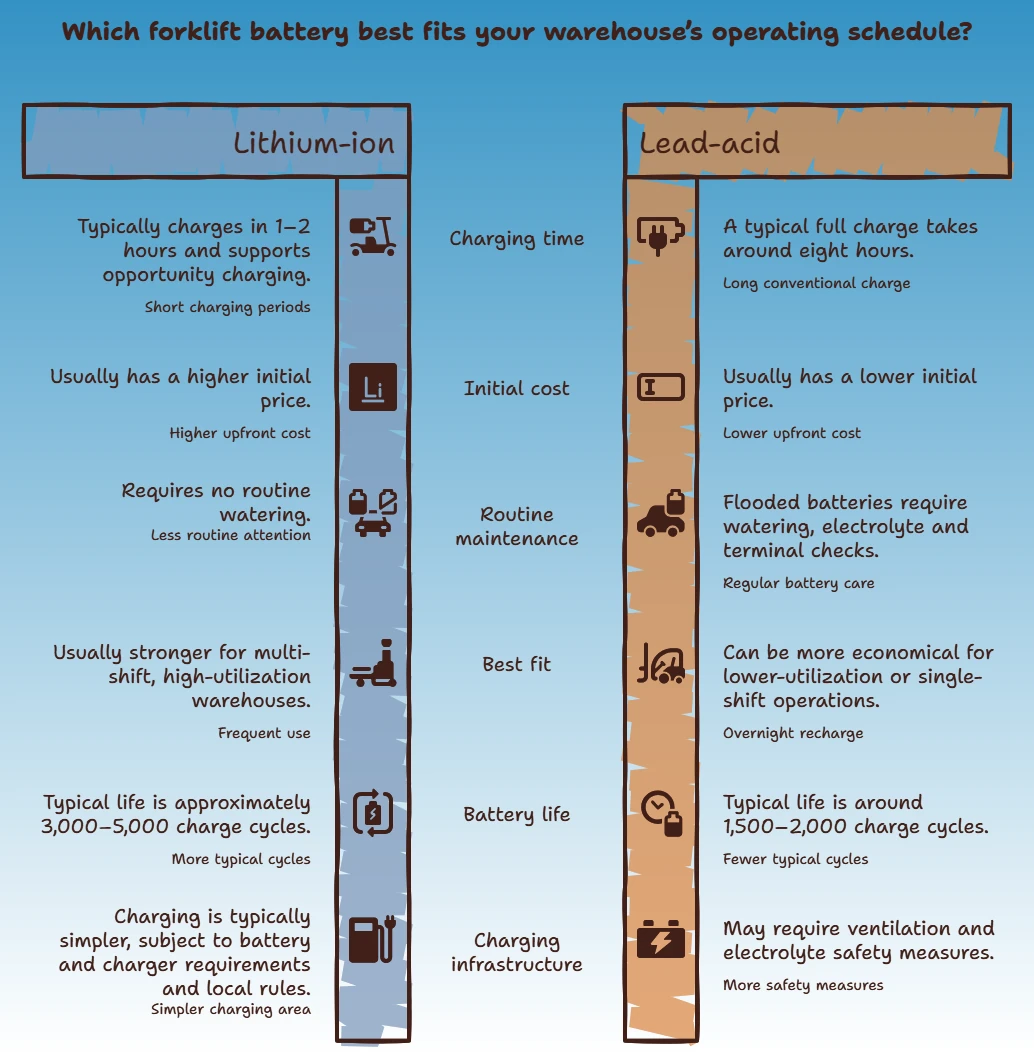
Toyota Material Handling states that its lithium-ion forklift batteries can typically charge from around 20% to full in 1–2 hours, depending on battery and charger size. The same manufacturer gives approximately 8 hours as a typical full-charge time for a lead-acid forklift battery.
Toyota also notes that a roughly 15-minute lithium charge can provide at least one hour of driving time in the referenced system.
Source: Toyota Material Handling Europe, Lithium-Ion Battery FAQ. Charging time depends on battery capacity, charger output, truck model and operating conditions.
For a warehouse that finishes work at 5 p.m. and does not restart until the next morning, an eight-hour charging window may be perfectly acceptable.
For a warehouse operating around the clock, it is a completely different problem.
A lithium battery can be charged during lunch breaks, shift changes or other planned pauses. This is commonly called opportunity charging.
The practical benefit is not merely “faster charging.” It can reduce the need to remove one discharged battery and install another charged battery just to keep the forklift working through a second shift.
That saves space, battery-handling equipment and labor—but only when the warehouse actually needs that utilization.
Lithium vs Lead-Acid Forklift Battery: Practical Comparison
| Buying Factor | Lead-Acid | Lithium-Ion |
|---|---|---|
| Initial Cost | Usually lower | Usually higher |
| Typical Charging Pattern | Long conventional charge, often overnight | Fast charging and opportunity charging |
| Routine Battery Maintenance | Watering, electrolyte and terminal checks for flooded batteries | No routine watering |
| Opportunity Charging | More restrictive; charging practice affects battery life | Well suited to short charging periods during breaks |
| Charging Area | May require ventilation and electrolyte safety measures | Typically simpler, subject to battery/charger requirements and local rules |
| Best Fit | Single-shift, budget-sensitive operations | Multi-shift and high-utilization fleets |
Battery Life Can Change the Total Cost Calculation
Upfront cost is where lead-acid usually looks strongest. Battery life is where the calculation begins to change.
Jungheinrich estimates typical forklift battery life at around 1,500–2,000 charge cycles for lead-acid batteries and approximately 3,000–5,000 cycles for lithium-ion batteries, depending on usage and maintenance.
Source: Jungheinrich forklift battery guidance. Actual battery life varies by chemistry, depth of discharge, temperature, charging practice and application.
OSHA separately notes that properly maintained industrial forklift batteries can remain in service for around 2,000 work shifts or charge/discharge cycles.
Source: U.S. Occupational Safety and Health Administration, Powered Industrial Trucks – Electric Power Sources and Battery Maintenance.
This does not mean a lithium battery will always last exactly twice as long.
Battery life is sensitive to temperature, charging behavior and discharge depth. A poorly managed lithium battery can age early, while a well-maintained lead-acid battery can deliver years of reliable service.
But for a fleet running enough hours to consume battery cycles quickly, longer cycle life can become a major part of the TCO calculation.
Lead-Acid Still Has One Very Strong Advantage: Purchase Price
For smaller businesses, cash flow matters.
If a warehouse runs only six or seven hours per day and the forklift can charge overnight, the operational advantages of lithium may not create enough savings to justify the higher initial price.
Lead-acid technology is also widely understood. Replacement batteries, chargers and service knowledge are available in many markets.
That can be particularly important for smaller importers purchasing equipment for locations where sophisticated battery service is harder to access.
A buyer should not pay for fast charging if the forklift never needs to charge quickly.
This is why RUNTX continues to offer both lead-acid and lithium battery configurations rather than forcing every electric forklift buyer into one battery technology.
The Hidden Cost of Lead-Acid Is Maintenance and Charging Infrastructure
Lead-acid batteries are inexpensive to understand, but they are not maintenance-free.
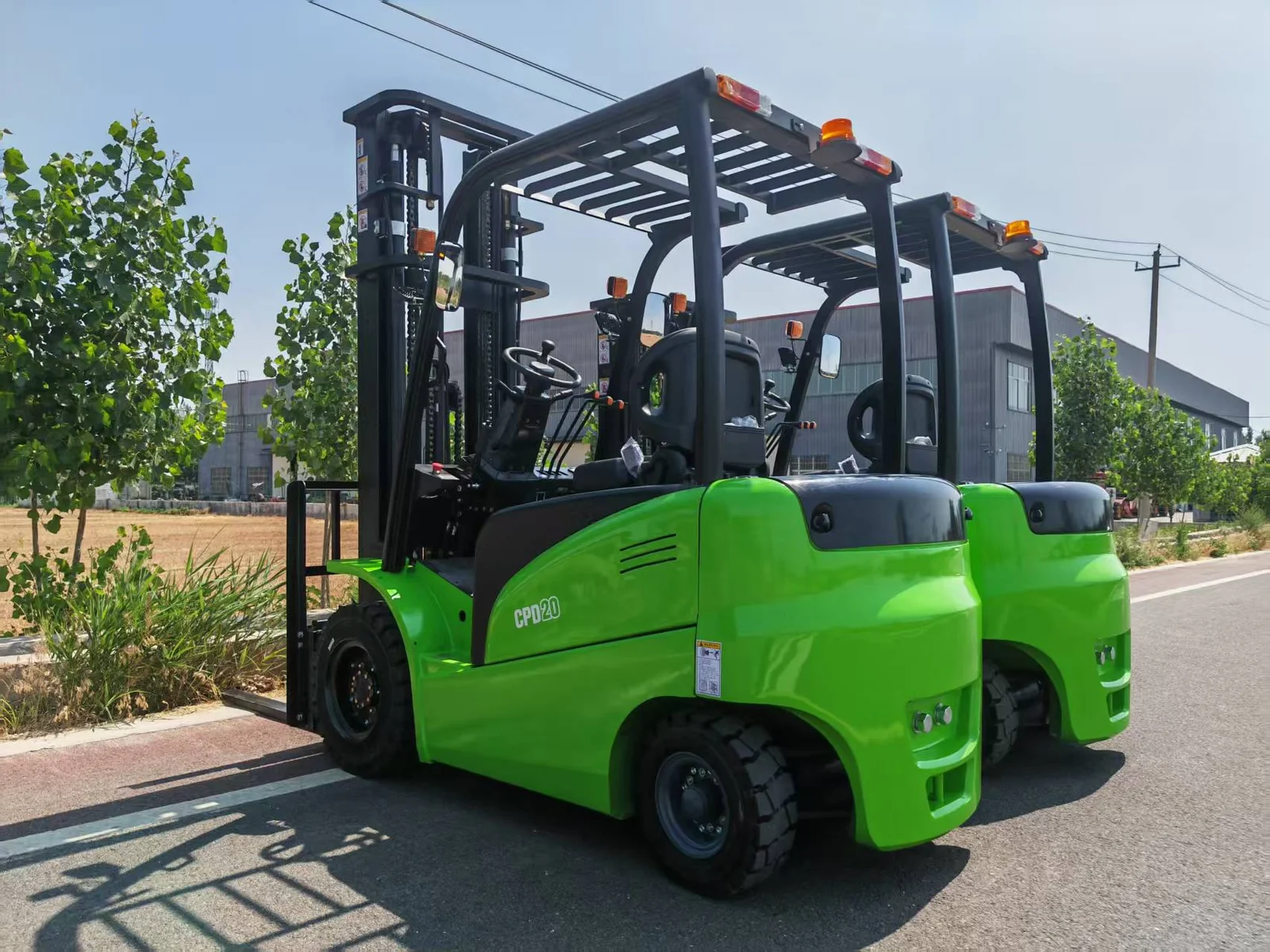
Flooded lead-acid forklift batteries contain sulfuric-acid electrolyte. Water levels need to be monitored, terminals inspected and charging procedures controlled.
OSHA requires designated battery-charging areas and, where applicable, adequate ventilation to prevent the accumulation of hydrogen generated during charging. Requirements also cover fire protection, flushing facilities and precautions against sparks or ignition sources.
Source: OSHA 29 CFR 1910.178(g) and OSHA Powered Industrial Truck battery-charging guidance.
That does not make lead-acid unsafe when properly managed. It simply means the warehouse needs a battery-management process.
For a fleet of one or two trucks, that workload may be minor.
For twenty trucks across several shifts, watering, checking, charging and occasionally changing batteries becomes a real labor activity.
Lithium eliminates the routine watering requirement and generally makes charging easier to integrate into normal operations.
Where RUNTX Battery Configurations Fit
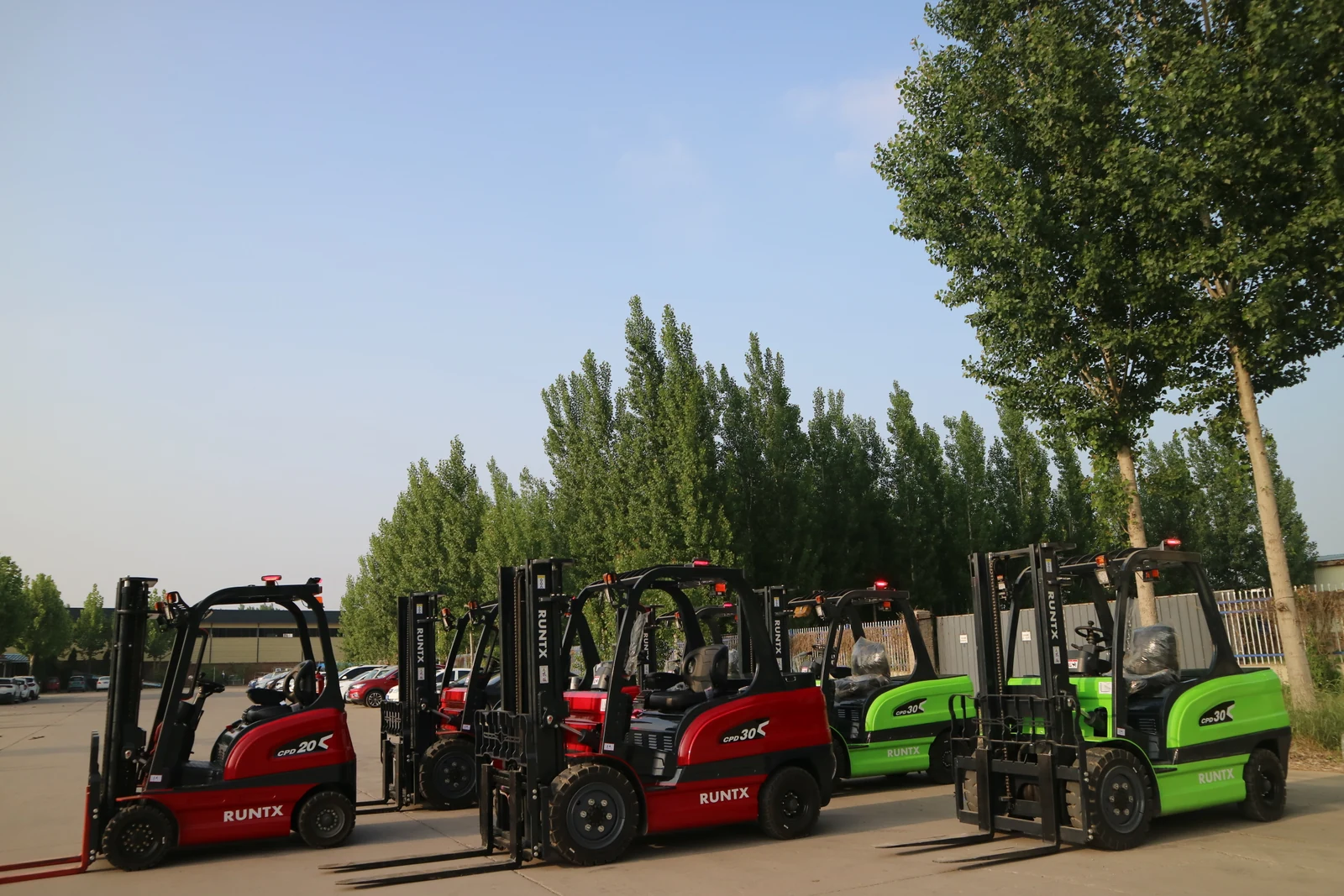
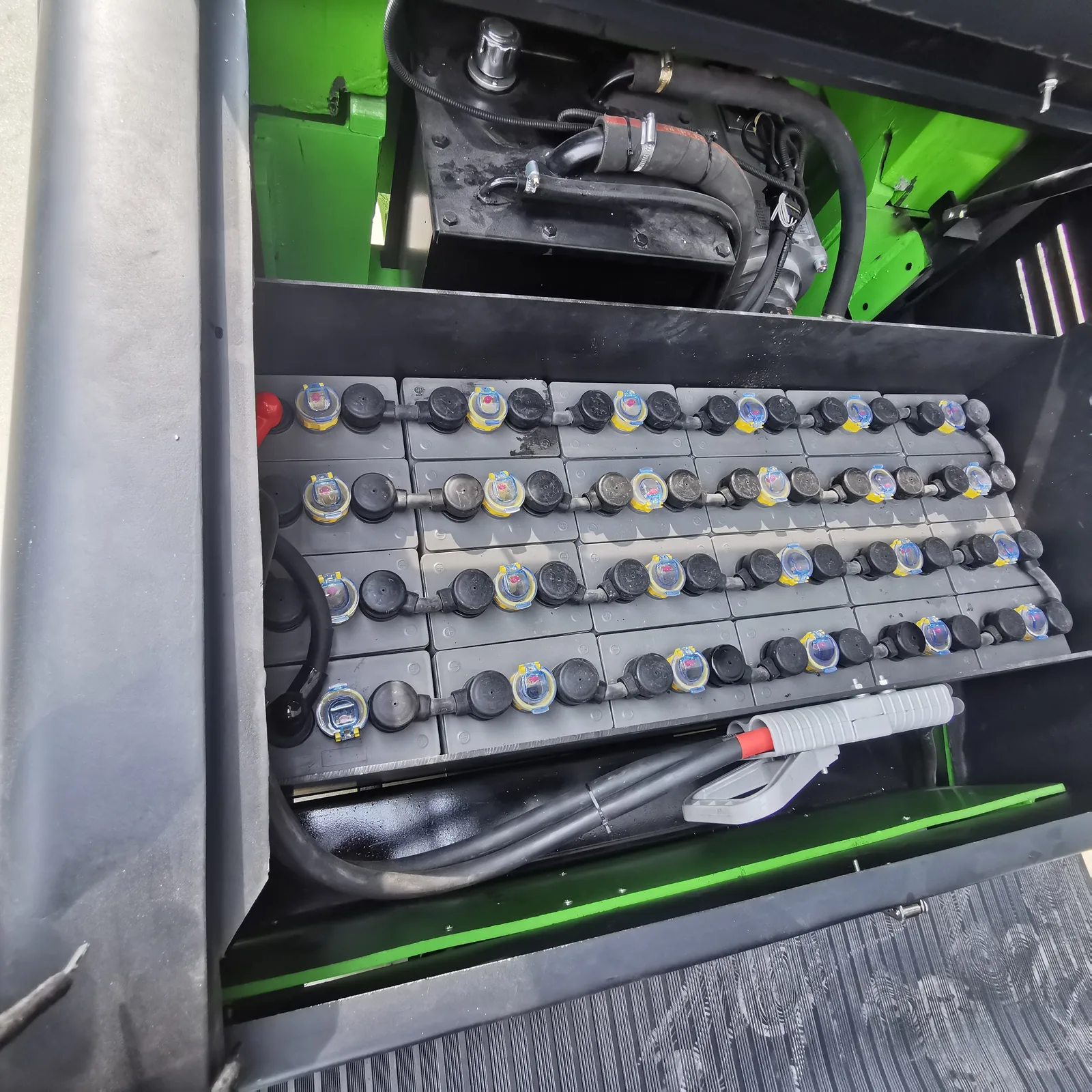
RUNTX electric forklifts can be configured with either lead-acid or lithium-ion batteries, allowing the power system to be matched to the buyer’s workload rather than treating one chemistry as mandatory.
For current RUNTX electric forklift configurations, commonly available battery sizes increase with truck capacity.
For approximately 1.5–1.8 ton models, lead-acid configurations are commonly built around 48V systems in the 400–550Ah range.
For 2–2.5 ton forklifts, available 48V configurations can extend roughly from 560Ah to 770Ah depending on truck and project requirements.
For the 3–3.5 ton class, 80V systems are used, with configurations around 500–600Ah available depending on the model and specification.
RUNTX can supply recognized lead-acid battery brands as well as lithium battery systems from established manufacturers such as BYD and EVE, depending on the project.
The wider RUNTX 4-Wheel Electric Forklift Range currently covers capacities from compact warehouse trucks through larger counterbalance models.
The Battery Is Only Part of the Electric System
A good electric forklift is not created simply by installing a large battery.
Controller quality, drive motor design, hydraulic motor efficiency and thermal management all influence how effectively that stored energy is used.
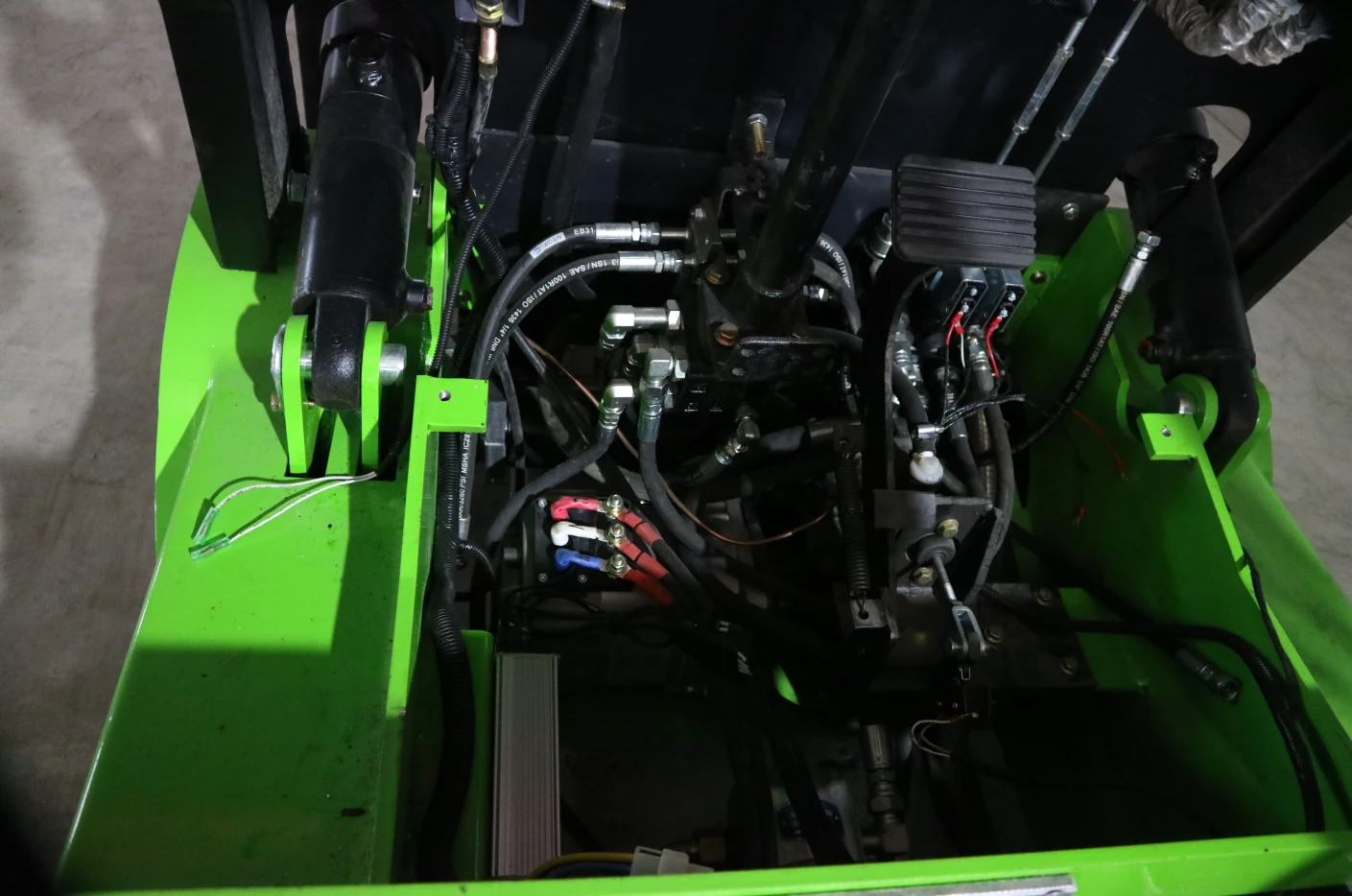
RUNTX electric forklift configurations use full AC drive systems, with controller options including established suppliers such as Curtis, Inmotion and ZAPI depending on the selected configuration.
The electric forklift platform also uses AC traction and pump motors. Compared with older DC systems, this reduces routine motor maintenance because there are no traction-motor brushes that require the same periodic replacement schedule.
Other available configurations include LED working lights, reinforced overhead-guard structures and different battery brands and capacities to match customer operating requirements.
The point is simple: battery chemistry should be selected as part of the complete vehicle specification, not as an isolated accessory.
Not Sure Whether Lithium or Lead-Acid Is Better for Your Fleet?
Tell RUNTX how many hours each forklift works per day, how many shifts you run, your available charging time and your preferred capacity. We can compare battery configurations around your actual operating schedule.
For a Single-Shift Warehouse, Lead-Acid Can Still Win
Imagine a small warehouse using one CPD20 for six hours per day.
The forklift finishes work every evening and then sits unused for twelve hours.
In that situation, the ability to recharge a lithium battery in two hours may have very little business value. The truck was going to sit overnight anyway.
A lower-cost lead-acid battery can therefore make financial sense, provided the buyer has an appropriate charging location and is willing to perform the required maintenance.
This is also why buying decisions based entirely on “newer technology” can be expensive.
ROI comes from solving an operational problem. If slow charging is not a problem, faster charging does not automatically create a return.
For Two or Three Shifts, the Economics Start to Reverse
Now take the same warehouse and run the forklift across two full shifts.
An eight-hour conventional charging period becomes much harder to fit into the schedule.
The business may need a second lead-acid battery, a battery-changing system or another forklift to cover downtime.
Lithium changes that calculation because operators can recharge during planned breaks and shift changes.
The Battery Council International specifically notes that lithium-ion technology becomes particularly compelling in intensive, round-the-clock operations because of faster charging, higher energy density and the elimination of battery watering.
Source: Battery Council International, Lithium-Ion Electric Forklift Batteries industry brief.
That is where a higher purchase price can be easier to justify—not because lithium is fashionable, but because the battery keeps the forklift available for more of the day.
What About Energy Efficiency?
Lithium-ion chemistry generally has an efficiency advantage, but buyers should be careful with dramatic savings claims.
Battery efficiency changes with charger design, temperature, state of charge and duty cycle. A percentage published for one battery or charger cannot automatically be applied to every forklift fleet.
The U.S. Department of Energy’s broader battery technology assessment places lithium iron phosphate around 82% round-trip efficiency in the modeled system, compared with roughly 78–79% for lead-acid.
Source: U.S. Department of Energy, Energy Storage Cost and Performance Assessment. These are battery-technology benchmarks from stationary storage modeling, not guaranteed forklift energy-consumption figures.
For a small warehouse, that difference may have less financial impact than battery purchase price.
For a large fleet charging every day, small efficiency improvements accumulate over thousands of charging cycles.
Frequently Asked Questions
Is lithium-ion always better than lead-acid for a forklift?
No. Lithium is usually more attractive for high-utilization and multi-shift applications. Lead-acid can remain more economical for low-hour or single-shift operations where overnight charging is available.
How long does a lithium forklift battery take to charge?
Depending on battery capacity and charger output, modern lithium forklift systems can often reach full charge in approximately 1–2 hours. Always use the charging specification supplied with the actual battery system.
How long does a lead-acid forklift battery take to charge?
A conventional full charge commonly takes around eight hours, followed by whatever cooling and maintenance schedule the battery manufacturer requires.
Does a lithium forklift battery need maintenance?
It does not require routine watering like a flooded lead-acid battery, but the battery, connectors, charger and BMS should still be inspected and maintained according to manufacturer instructions.
Can RUNTX electric forklifts use both battery types?
Yes. RUNTX can configure suitable electric forklift models with lead-acid or lithium-ion battery systems according to capacity, operating schedule, market requirements and buyer preference.
Which battery is better for a rental fleet?
It depends on utilization. A high-turnover rental fleet may benefit from lithium’s faster charging and lower routine battery maintenance, while budget-sensitive or lower-hour rentals may still favor lead-acid because of its lower initial cost.
The Better Battery Is the One That Matches the Shift
The lithium-versus-lead-acid debate becomes much easier once you stop treating it as a technology competition.
If the forklift runs one shift and has all night to charge, lead-acid may deliver exactly what the business needs at a lower entry cost.
If the forklift runs two or three shifts, battery changes are creating downtime and the charging room is consuming valuable space, lithium becomes much more compelling.
For most small and medium businesses, the first question should therefore not be:
“Which battery is better?”
It should be:
“How many productive hours do I need from this forklift every day?”
Once that number is clear, the battery decision becomes much easier.
Choose the Battery Around Your Warehouse, Not the Trend
Tell RUNTX your forklift capacity, daily working hours, number of shifts and available charging time. We can prepare lead-acid and lithium configurations for a single forklift or a complete electric fleet.