Comparing 6 ton diesel forklift prices? Learn how to evaluate supplier quotations, specifications, operating costs and factory support before choosing the cheapest offer.
A competitive 6 ton diesel forklift price can look attractive on a quotation, but price alone tells you surprisingly little about whether the truck will make money for your business.
This is especially important for small contractors, independent rental companies, building-material suppliers and growing industrial businesses. If you are buying only one or two forklifts, you cannot spread a poor purchasing decision across a fleet. The machine needs to arrive correctly configured, handle your actual load safely and remain easy to maintain without eating into your operating margin.
When buyers compare quotations from several 6 ton diesel forklift suppliers, the cheapest offer may have a different engine configuration, mast, tires, attachment package, warranty scope or shipping basis. In other words, two forklifts both labeled “6 ton” may not represent the same investment.
1. What Should a Competitive 6 Ton Diesel Forklift Include?
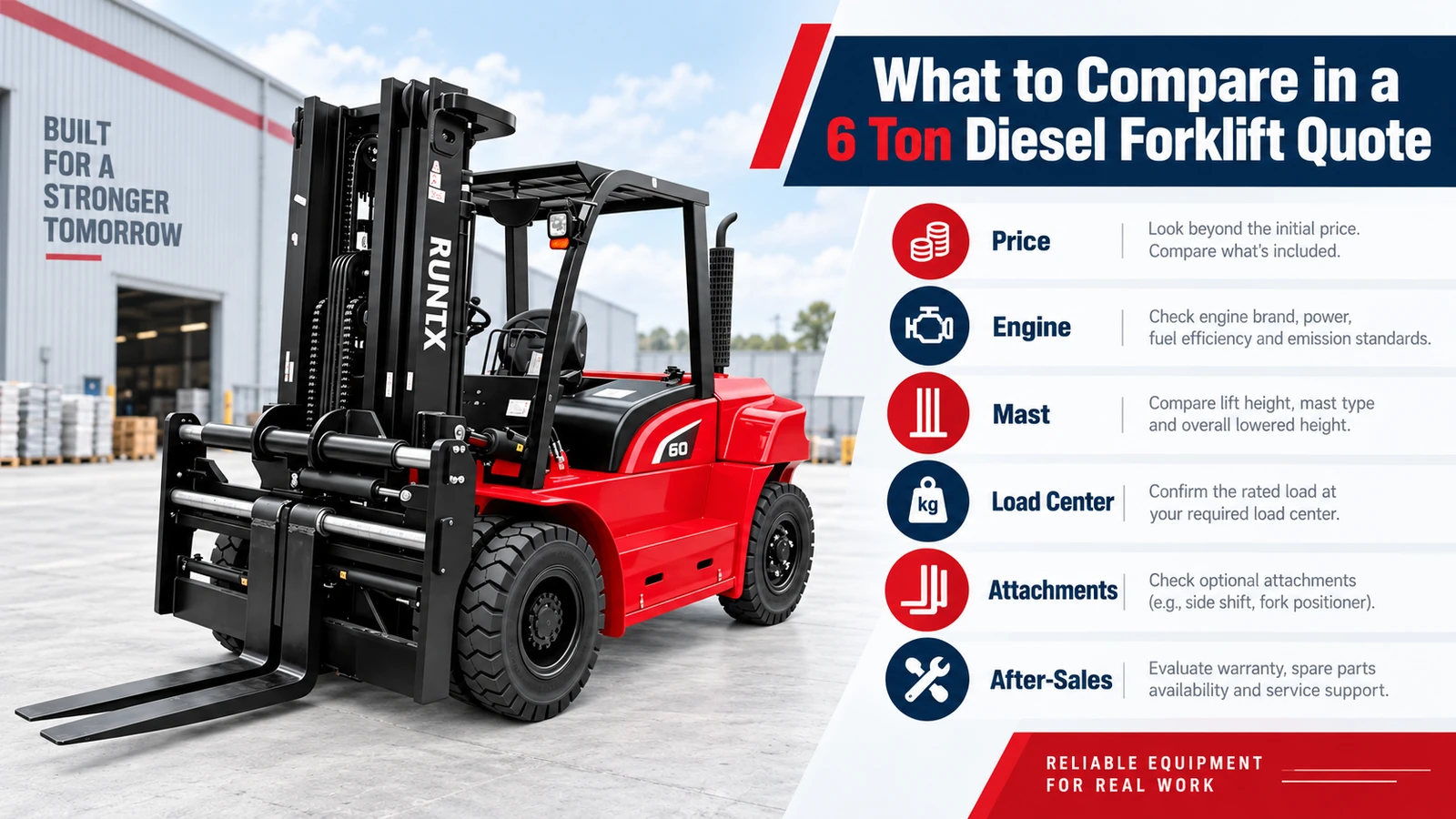
A 6 ton forklift sits above the common 2.5–3.5 ton warehouse class and is typically purchased for more demanding work: steel products, stone, building materials, machinery components, molds, timber, industrial pallets and outdoor logistics.
At this capacity, buyers should expect more than a larger counterweight. The complete chassis, steering axle, mast, hydraulic system, transmission, tires and cooling package need to support repeated heavy-load cycles.
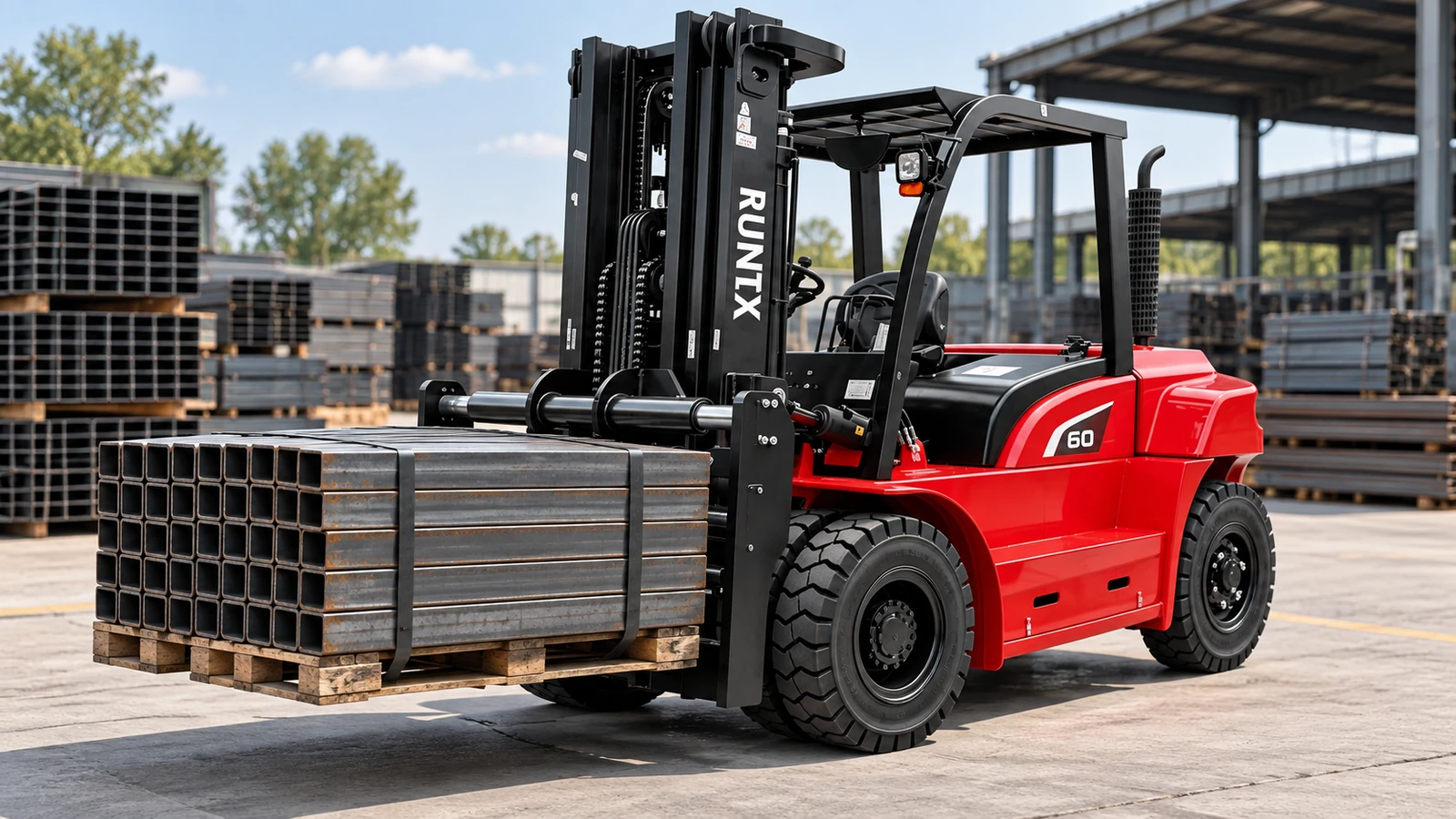
The current RUNTX CPCD60 6 Ton Diesel Forklift, for example, is configured around a 6,000 kg rated capacity and 3,000 mm standard lift height. Its design also includes heavy-duty structural components, hydraulic protection and convenient engine access intended for demanding industrial operation.
When asking other suppliers for quotations, request the same basic information so you can make a fair comparison.
Your quotation should clearly state:
- Rated load capacity and load center
- Standard and optional lift heights
- Engine model and emission configuration
- Transmission type
- Pneumatic or solid tire specification
- Fork dimensions
- Attachment configuration
- Warranty coverage
- Spare-parts support
- FOB, CIF or other shipping terms
2. Compare Supplier Types, Not Just Supplier Prices
Most international buyers will encounter three basic sourcing channels: a local dealer, an export trading company and a direct forklift manufacturer. None is automatically right or wrong, but the cost structure is different.
| Buying Factor | Local Dealer | Trading Company | Direct Manufacturer |
|---|---|---|---|
| Initial Price | Usually includes local margin | Varies by sourcing channel | Factory-direct structure |
| MOQ Flexibility | Often single unit | Supplier dependent | Can be flexible by factory |
| Customization | Usually limited | Requires factory coordination | Direct OEM/ODM communication |
| Technical Communication | Local sales/service team | Depends on technical ability | Direct access to engineering team |
| Export Logistics | Already imported locally | Usually available | Factory + export coordination |
For a business buying one machine, a direct factory does not make sense if it demands a large fleet order. This is why flexible procurement terms matter. RUNTX supports 1 Unit MOQ for suitable configurations, allowing contractors and smaller industrial buyers to access factory-direct pricing without purchasing multiple forklifts at once.
3. A Low Purchase Price Can Hide a Higher Fuel Bill
Diesel consumption becomes meaningful quickly when the machine works every day. A U.S. Department of Energy project used an assumption of approximately 0.8 gallons of forklift fuel per operating hour. This figure is a project benchmark rather than a fuel-consumption specification for a particular 6 ton forklift, but it illustrates the scale of fuel spending.
At 2,000 operating hours per year, that benchmark represents approximately 1,600 gallons of fuel annually. Your actual consumption will depend on engine displacement, hydraulic demand, load weight, driving distance, operator behavior and idle time.
This is why buyers should ask each supplier about engine configuration instead of comparing only engine horsepower. A properly matched engine needs enough low-speed torque for loaded travel and hydraulic work without being unnecessarily oversized.
4. Check Load Center Before Comparing “6 Ton” Capacity
A forklift’s capacity is not simply the number printed on the side panel. Rated capacity is tied to a defined load center and lift configuration.
Attachments make this even more important. OSHA provides a practical example of a forklift rated at 5,000 lb with standard forks whose rated capacity becomes 4,500 lb with a sideshifter. That represents a 10% reduction in that particular truck-and-attachment configuration.
The lesson is especially relevant when purchasing a 6 ton diesel forklift for steel, stone, machinery or long building materials. A sideshifter, fork positioner, clamp or longer fork can move the combined center of gravity forward.
Therefore, do not ask only:
“Can this forklift lift six tons?”
Ask:
“What is the residual capacity with my load dimensions, lift height and final attachment installed?”
5. Maintenance Access Directly Affects Small-Fleet ROI
A large logistics company may have technicians on every shift. A contractor with one forklift usually does not. That makes serviceability particularly important for small buyers.
Look for easy access to the engine, filters, cooling system, battery, hydraulic components and electrical connections. A supplier should also be able to provide an illustrated parts catalogue and routine maintenance documentation.
RUNTX uses a large-opening engine hood on the CPCD60 to make common service points easier to reach. The machine also uses additional hydraulic filtration and protected electrical components to reduce contamination-related maintenance problems in demanding environments.
The practical benefit is simple: your technician should spend less time dismantling covers just to perform basic inspections.
6. Do Not Save Money by Ignoring Safety
Forklifts operate close to workers, trucks, storage areas and expensive cargo. According to the UK Health and Safety Executive, lift trucks are involved in about one-quarter of workplace transport accidents. HSE also reports that vehicle overturns cause nearly one-fifth of workplace transport deaths.
These figures explain why a cheaper forklift with poor visibility, unsuitable tires, weak braking performance or an incorrectly matched load can become very expensive.
Before accepting a quotation, verify:
- Service and parking brake performance
- Operator visibility through the mast
- Seat restraint and overhead guard
- Lighting, horn and reversing warning equipment
- Tire suitability for your yard surface
- Correct capacity plate for the final configuration
For wet yards, gravel, construction materials or uneven surfaces, tire selection deserves particular attention. A cheap tire upgrade later may involve downtime and additional freight, so confirm the correct configuration before production.
7. Calculate Landed Cost Instead of Comparing FOB Price Only
This is one of the most common mistakes in international forklift sourcing. Supplier A may appear cheaper because its quotation is FOB, while Supplier B includes freight, export handling or additional equipment.
Your real comparison should include:
- Forklift price
- Attachment and fork cost
- Export packing
- Inland freight to port
- Ocean freight
- Destination charges
- Import duty and local tax where applicable
- Initial spare-parts package
For first-time importers, this is also where factory export experience becomes valuable. RUNTX provides support for commercial invoices, packing lists, bills of lading, certificates and shipping coordination, and can discuss FCL, flat-rack or Ro-Ro solutions depending on the machine and destination.
You can also compare the wider RUNTX Diesel Forklift range if 5 ton, 7 ton or 8 ton capacity would better fit your daily loads.
Already Comparing Several 6 Ton Forklift Quotes?
Send RUNTX your required capacity, lift height, attachment and destination port. We can prepare a comparable factory-direct configuration so you can evaluate the real equipment cost instead of comparing incomplete quotations.
8. When Is a Factory-Direct 6 Ton Forklift the Better Buy?
Factory-direct sourcing is particularly attractive when you need a non-standard configuration, want to avoid multiple layers of markup or plan to build a small rental or distribution fleet gradually.
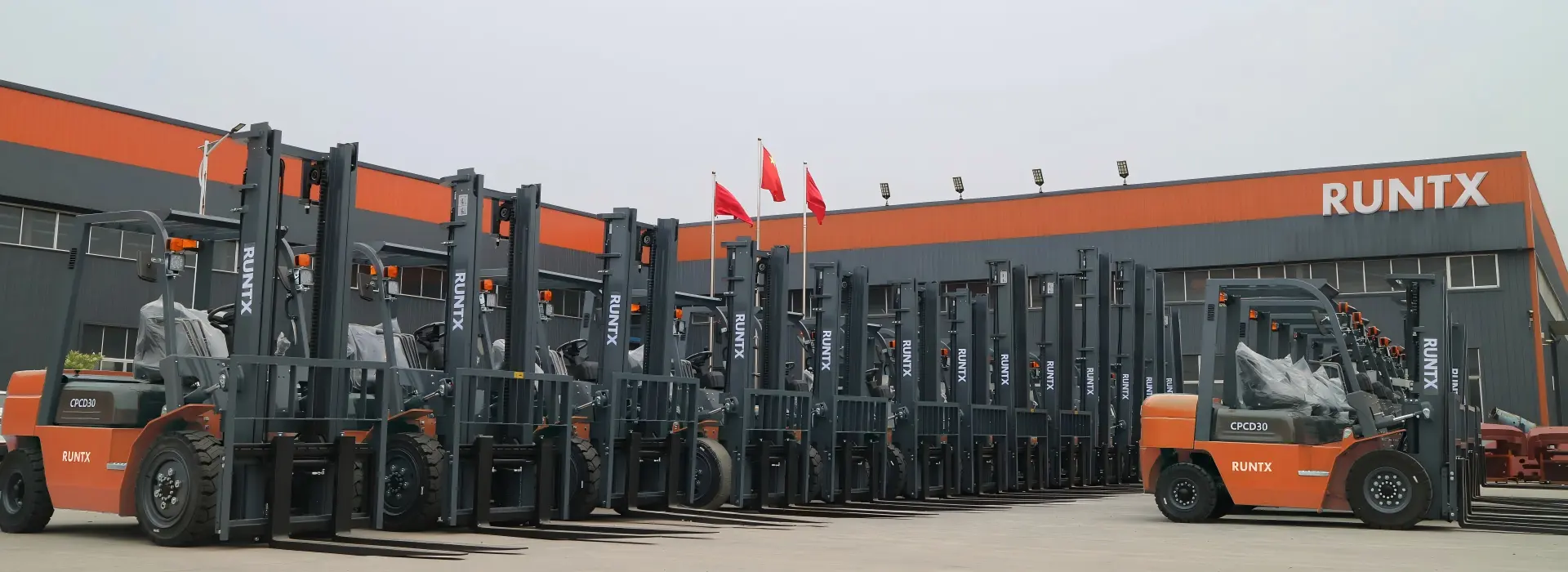
As a source manufacturer, RUNTX supports OEM/ODM customization for mast configuration, forks, attachments, tires, engines, paint and private branding. For smaller buyers, the key difference is purchasing flexibility: single-unit orders are supported, while dealers and rental companies can request small-batch wholesale pricing as their demand grows.
That means you do not have to choose between paying full local retail pricing and ordering an unrealistic number of machines from a factory.
Frequently Asked Questions
How much does a 6 ton diesel forklift cost?
The final price depends on engine specification, mast height, tires, forks, attachments, emission requirements and shipping terms. For this reason, supplier quotations should be compared using the same configuration instead of relying on a single advertised price.
Is a Chinese 6 ton diesel forklift suitable for small businesses?
It can be, especially when the manufacturer accepts single-unit orders and provides export support, spare parts and clear technical documentation. Small buyers should prioritize serviceability and landed cost rather than simply choosing the lowest factory quotation.
Should I buy a 5 ton or 6 ton forklift?
Choose based on actual load weight, load center, attachments and required reserve capacity. If your normal loads remain comfortably below five tons, a properly configured 5 ton model may offer lower acquisition and operating costs. If loads regularly approach that limit, a 6 ton truck may provide more suitable reserve capacity.
Can I buy only one RUNTX CPCD60?
Yes. RUNTX supports 1 Unit MOQ for suitable orders, making factory-direct purchasing accessible to contractors, rental companies, factories and independent buyers.
Can RUNTX arrange international shipping?
Yes. RUNTX can assist with export documentation and international logistics planning. The most suitable shipping method depends on the forklift configuration and destination.
Final Verdict: Compare Value Per Working Hour, Not Just Purchase Price
A competitive 6 ton diesel forklift is not necessarily the machine with the lowest quotation. The better purchase is the one that combines the correct capacity, practical maintenance access, suitable engine and tires, reliable safety configuration and manageable landed cost.
For small contractors and independent fleet owners, these details have an outsized effect on ROI because every hour of downtime matters.
Compare quotations carefully, verify the final specification and calculate what the machine will cost to operate—not only what it costs to buy.
Compare Your 6 Ton Forklift Quote With Factory-Direct Pricing
Buying one machine? Request single-unit factory pricing. Building a rental or dealer fleet? Ask for small-batch wholesale terms. Send us your required lift height, attachment and destination to receive a comparable quotation.