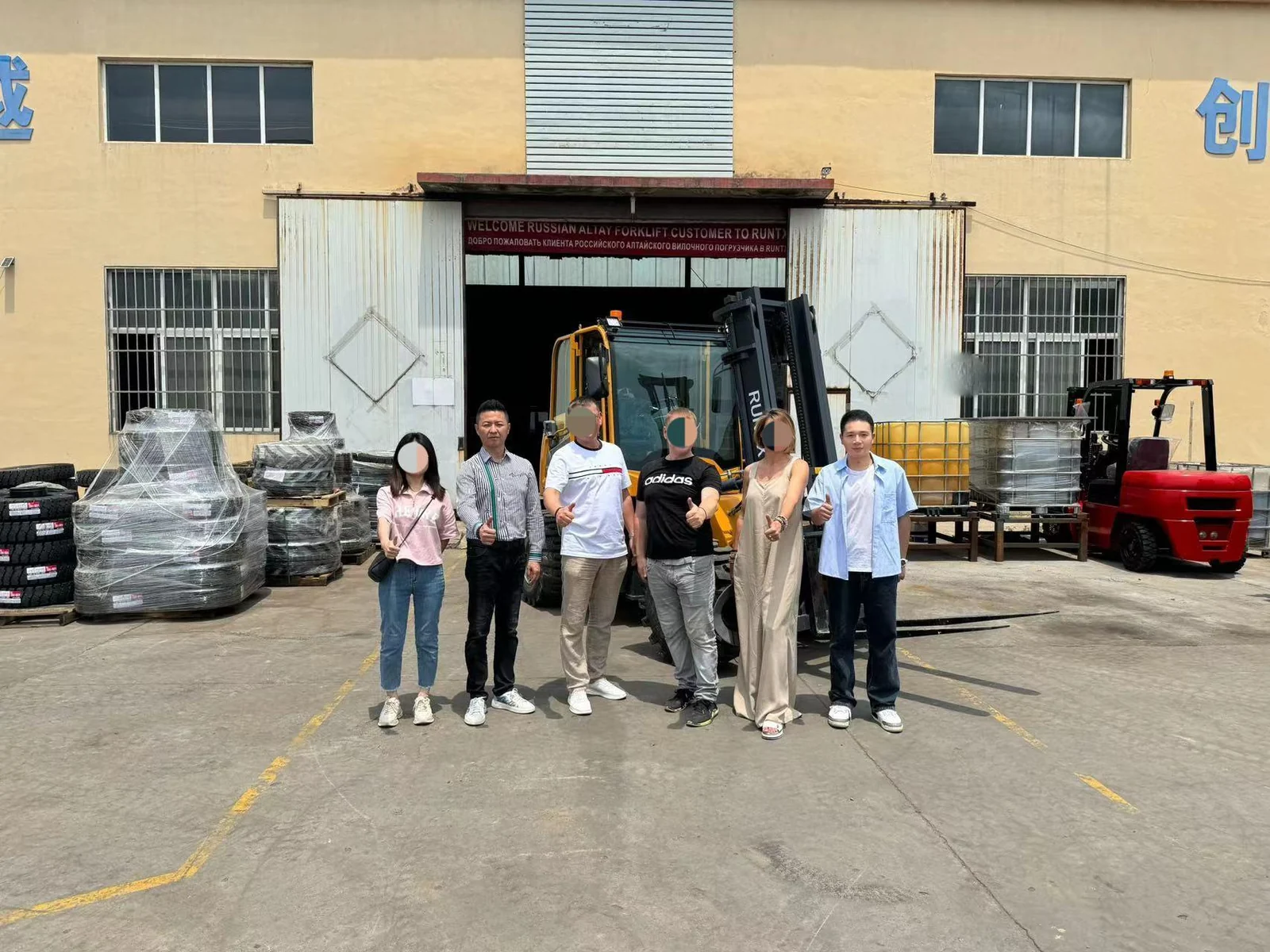
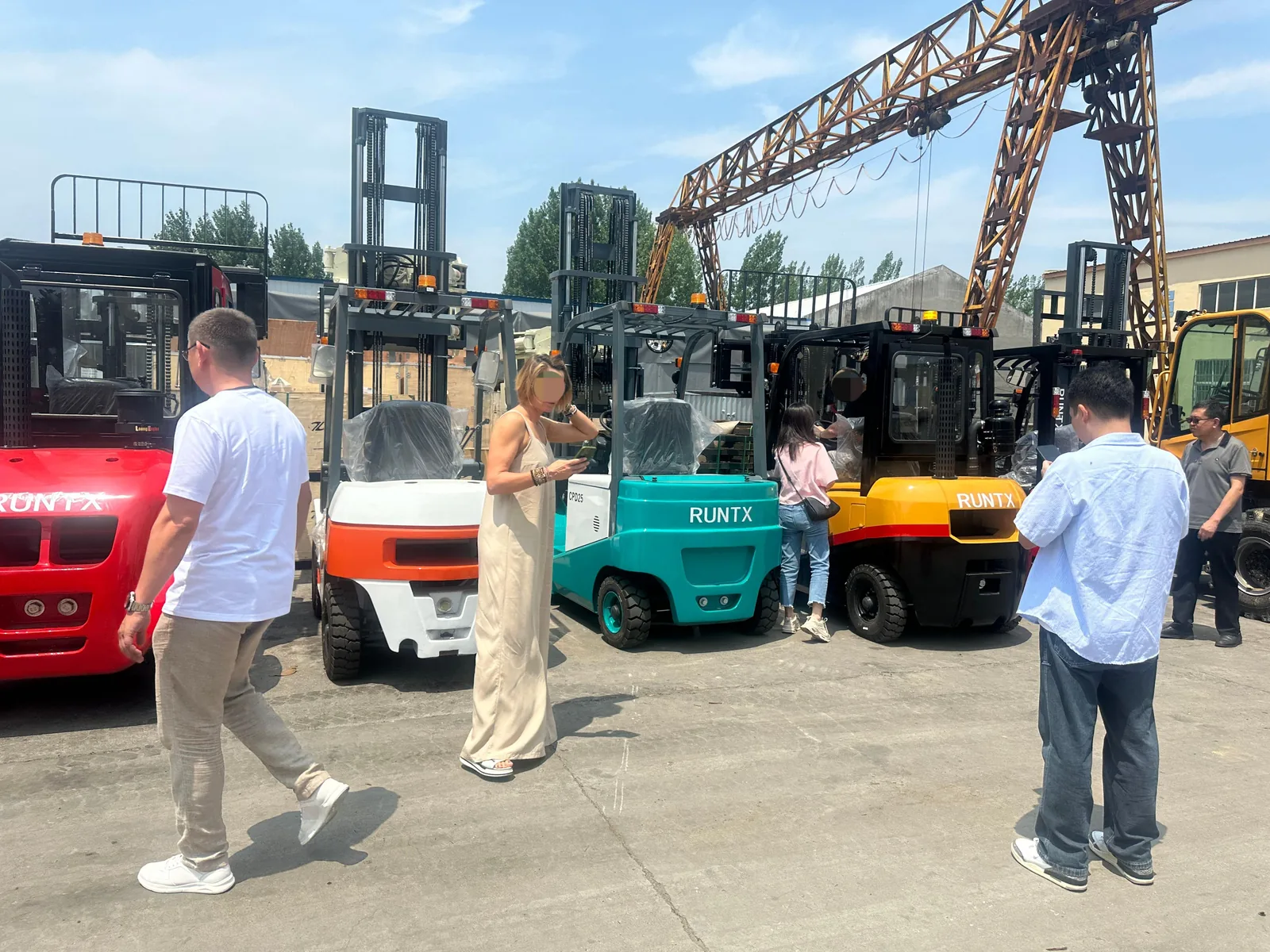
From walking through the factory to getting behind the wheel, visiting customers from Russia experienced RUNTX forklifts firsthand before moving forward with their equipment evaluation.
For an overseas forklift buyer, a specification sheet can tell you load capacity, mast height, engine options, and dimensions. It cannot tell you everything about how a machine actually feels when you start it, steer it, brake it, raise the mast, or drive across a working yard.
That is why factory visits remain valuable even in an age of video calls and online sourcing.
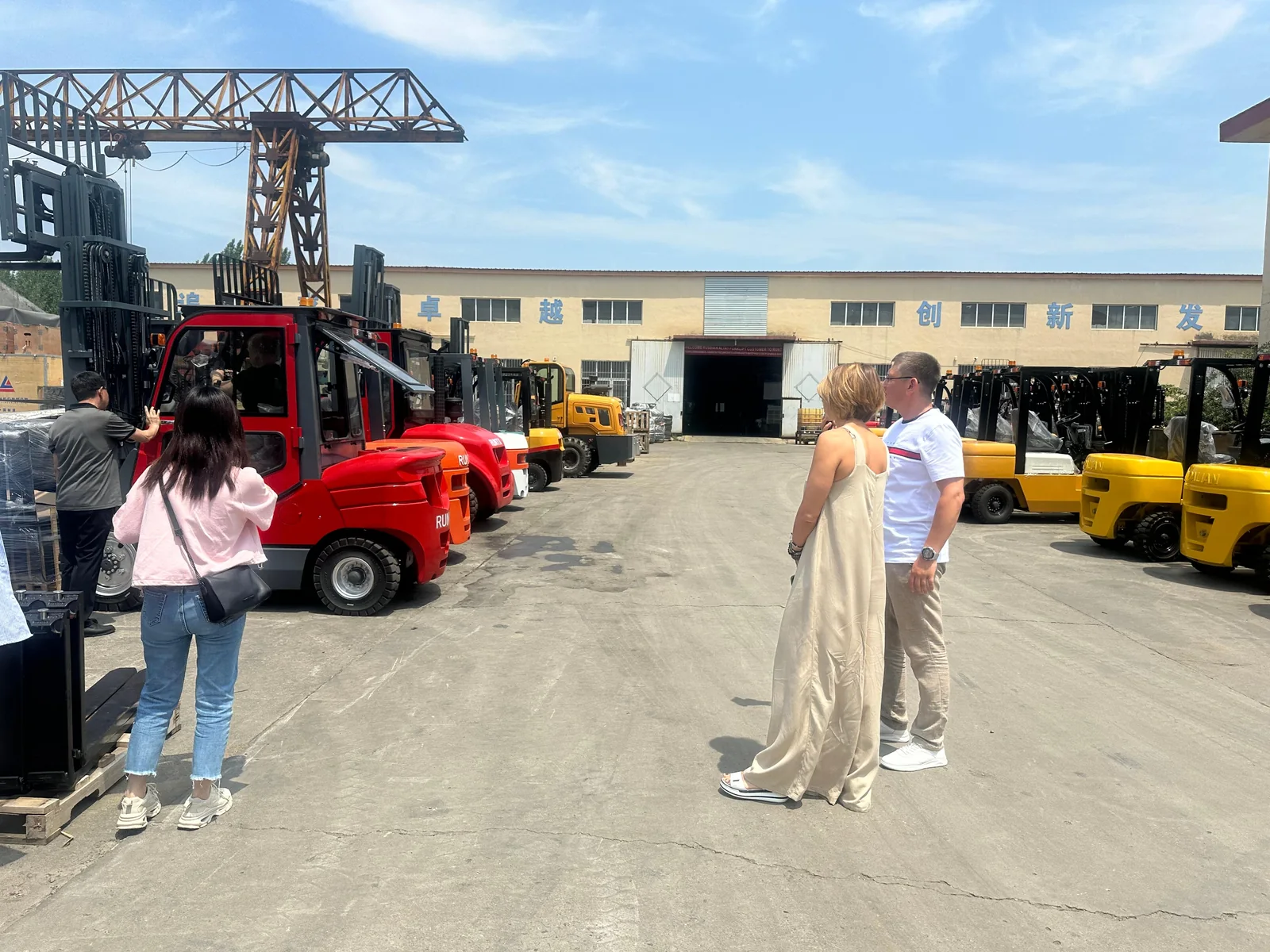
Recently, a group of Russian customers visited the RUNTX forklift manufacturing facility in China for an on-site inspection and hands-on forklift test drive. Rather than limiting the visit to a showroom presentation, the customers had the opportunity to see equipment at the factory, communicate directly with our team, and personally evaluate the driving experience of a diesel counterbalance forklift.
For distributors and larger fleet buyers, this type of visit helps verify manufacturing capability before developing a long-term sourcing relationship. For smaller contractors, rental operators, warehouse owners, and first-time importers, the same principle is equally useful: the best forklift is not simply the one with the lowest quotation—it is the one that fits the actual job and feels predictable in daily operation.
Why These Customers Chose to Visit the Factory in Person
When forklifts are purchased internationally, buyers often have to make decisions using quotations, videos, product photos, and technical tables. These tools are important, but they only show part of the picture.
A physical factory visit allows a buyer to verify several things at the same time:
- Whether the supplier has real production and equipment resources
- How finished forklifts are assembled and prepared
- Whether machine details match the quotation and technical documents
- How accessible important service areas are
- How the forklift responds during actual operation
- Whether the supplier can discuss customization directly and technically
For distributors, this is particularly important because they are not purchasing only for themselves. They may later need to explain the equipment to contractors, rental businesses, warehouse customers, or their own regional dealer network.
Seeing the equipment firsthand gives them more confidence when answering practical questions from their customers.
The Test Drive: Looking Beyond the Specification Sheet
One of the most important parts of this visit was the hands-on driving session.
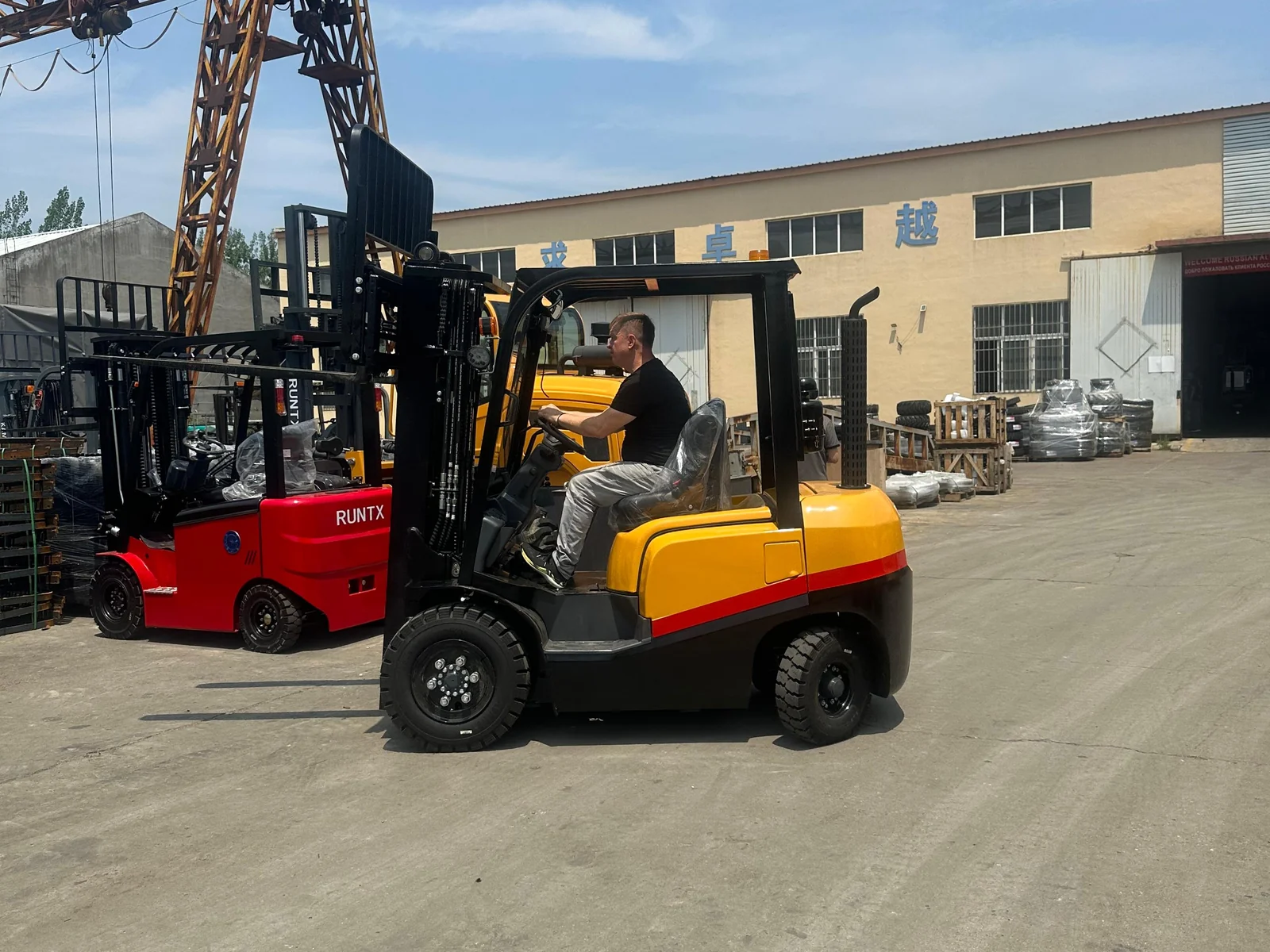
During the test drive, the customer was able to operate the forklift directly in the factory yard. This provides information that is difficult to communicate through a catalog.
1. Steering Feel and Maneuverability
For a forklift that may spend its entire working life moving between trucks, material stacks, warehouse doors, and loading areas, steering behavior matters every day.
A buyer should pay attention to whether steering feels predictable and whether the machine can be positioned without excessive correction. This becomes especially important for independent rental companies, where different operators may use the same machine.
2. Forward Visibility
A mast is not only a lifting structure—it also sits directly in the operator’s forward sightline.
During a physical test drive, the buyer can check visibility through the mast, around the fork carriage, and toward the tips of the forks. Better visibility makes load positioning easier and reduces unnecessary repositioning when entering pallets or approaching cargo.
3. Operator Position and Controls
A forklift may be driven for several hours in a single shift. Seat position, pedal layout, steering position, hydraulic controls, entry space, and general ergonomics therefore have a real impact on daily use.
These details may appear minor during purchasing, but they become much more noticeable after hundreds of operating hours.
4. Hydraulic Response
A good test should also include mast lifting and lowering rather than only driving forward and backward. The buyer should observe whether hydraulic movements are controllable and whether the operator can make small positioning adjustments without abrupt movement.
What a Factory Visit Can Tell a Distributor
A distributor evaluates a forklift differently from someone purchasing one truck for one warehouse.
The machine must not only work—it must also be commercially practical to sell, service, and support across multiple customers.
That means a distributor may look closely at:
| Evaluation Area | Why It Matters |
|---|---|
| Common Capacity Range | Popular capacities can serve contractors, warehouses, rental users, and industrial customers. |
| Service Accessibility | Simpler routine maintenance reduces after-sales difficulty for local dealers and fleet operators. |
| Parts Standardization | A manageable spare-parts inventory makes fleet support easier. |
| OEM/ODM Options | Regional distributors may require different colors, engines, masts, tires, attachments, or private branding. |
| Operator Acceptance | A machine that feels easy and predictable to drive is easier to introduce to different end users. |
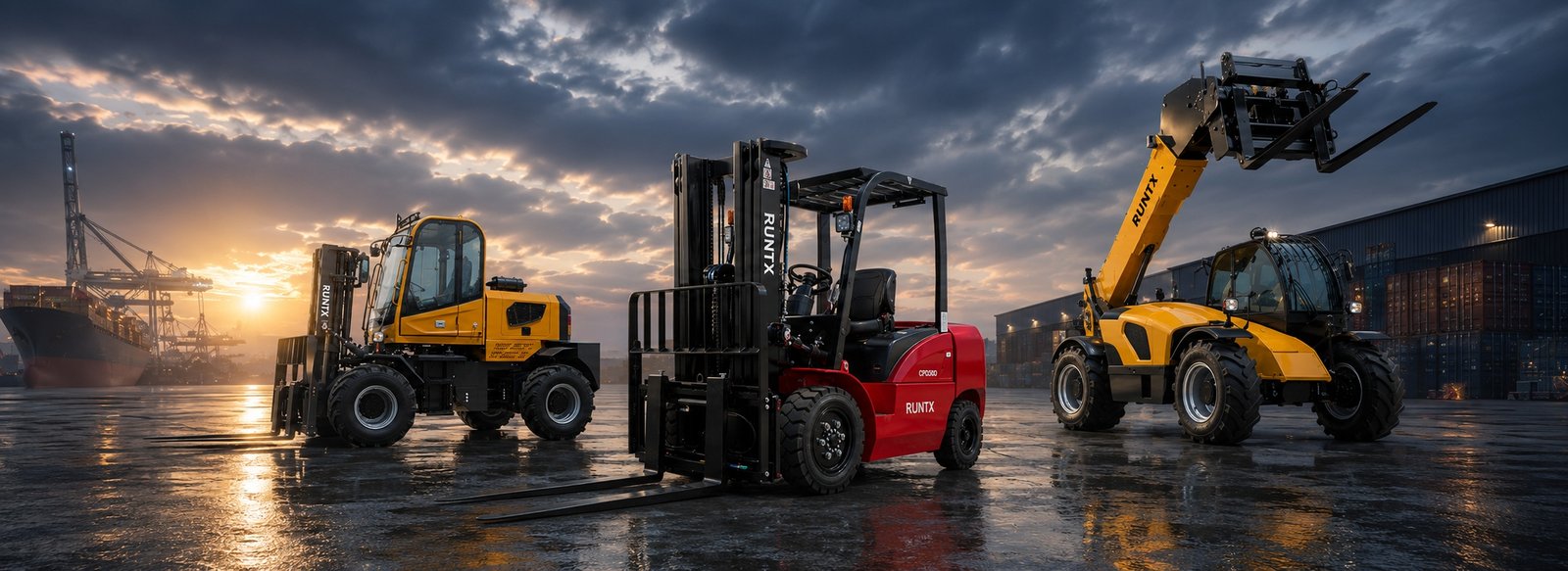
RUNTX currently offers a broad diesel forklift range for applications ranging from general warehouse and yard work to larger industrial handling.
For buyers evaluating one of the most common general-purpose capacity classes, the RUNTX CPCD30 3 Ton Diesel Forklift is a representative option. The current CPCD30 specification lists a 3,000 kg rated capacity, 500 mm load center, and a minimum turning radius of approximately 2,400 mm, making this capacity class relevant to warehouses, rental fleets, building-material yards, and general industrial logistics.
Why Small Buyers Should Care About Factory Transparency Too
Factory inspections may sound like something only large distributors do. In reality, the underlying principle matters just as much when you are buying only one forklift.
A small contractor may depend on a single machine for loading materials every morning. An independent rental operator may need that one forklift available for the next customer instead of waiting for repairs. A smaller warehouse may not have an in-house maintenance department.
In those situations, reliability problems become even more expensive because there is no backup fleet.
This is why RUNTX encourages buyers to evaluate not only the product but also the manufacturing and support behind it. Our factory and manufacturing overview explains the production, assembly, inspection, and dynamic testing processes used before equipment delivery.
And smaller buyers are not excluded from factory-direct sourcing. Suitable RUNTX models can be purchased with 1 Unit MOQ, allowing a contractor, rental company, warehouse owner, or direct end user to source one machine without committing to a distributor-sized order.
Direct Factory Communication Makes Customization Easier
Another advantage of visiting the manufacturing side is the ability to discuss equipment configuration directly.
Depending on the model and destination market, buyers may need different:
- Mast heights
- Fork lengths
- Pneumatic or solid tires
- Side shifters or fork positioners
- Engine and emission configurations
- Lighting packages
- Cab or weather protection
- Paint colors and private branding
For distributors, this supports regional product positioning. For smaller buyers, it prevents paying for features that are unnecessary—or discovering after delivery that an essential option was omitted.
Cannot Visit the Factory in Person?
Send us your load weight, lifting height, working surface, daily operating hours, and destination. RUNTX can recommend a configuration and provide detailed photos, technical data, and operating videos before you place an order.
From Factory Inspection to Long-Term Cooperation
For our Russian visitors, the trip was an opportunity to move beyond product brochures and see RUNTX equipment in a real manufacturing environment.
The customers were able to meet our team, inspect forklifts at the facility, and personally test drive a machine in the yard. For us, this kind of visit is equally valuable because direct customer feedback helps our team understand what international buyers pay attention to in actual operation.
Whether the next customer is a regional distributor purchasing a fleet or a contractor purchasing one forklift, the objective remains the same: match the machine to the real application and make the purchasing process as transparent as possible.
Frequently Asked Questions
Can overseas customers visit the RUNTX forklift factory?
Yes. Overseas buyers can discuss factory visits with the RUNTX team in advance so that relevant equipment, production information, and technical personnel can be prepared for the visit.
Can customers test drive a forklift during a factory visit?
Test arrangements can be discussed according to the available machine, site conditions, and visit schedule. In this Russian customer visit, the customer personally operated a forklift in the factory yard.
Do I need to be a distributor to buy directly from RUNTX?
No. RUNTX serves distributors and fleet buyers, but suitable forklift models are also available to small contractors, rental companies, warehouse owners, and direct buyers with flexible purchasing options including 1 Unit MOQ.
Can RUNTX customize forklifts for different markets?
Yes. OEM/ODM options can include mast configurations, forks, tires, attachments, engine options, colors, and branding depending on the model and application.
How can I evaluate a forklift if I cannot travel to China?
You can provide your application requirements and request detailed specifications, machine photos, operating videos, and configuration recommendations. This helps narrow down the correct model before discussing the final quotation.
Want to Inspect a RUNTX Forklift Before You Buy?
Visit our factory, request a remote operating demonstration, or send us your application details. From single-unit buyers to regional distributors, RUNTX provides factory-direct pricing, OEM/ODM support, and export assistance.