From a 3-ton timber-yard truck to a 10-ton steel-handling machine: choose the right sideloader by load center, working space, operating costs and real specifications.
A conventional forklift may lift a bundle of steel tubes perfectly well, yet struggle to carry it through a narrow yard gate. For a small timber merchant, metal fabricator or equipment rental business, that problem can mean extra handling, scratched materials and time spent repositioning loads. A side loader forklift could be the better solution.
This practical buying guide explains where sideloaders earn their keep, how to compare 3-ton, 6-ton, 8-ton and 10-ton diesel models, and which questions to ask before investing. Product figures come from the RUNTX catalog; other evidence is attributed separately.

What Is a Side Loader Forklift—and When Is It Worth Buying?
A sideloader uses a side-mounted lifting mast and a load-supporting deck. It approaches timber packs, beams, aluminum profiles or pipes from the side, raises them onto the deck and travels with the long material broadly aligned with the vehicle. That arrangement can reduce the sweeping space required by a front-facing long load.
It does not mean the truck can operate in every narrow aisle. You must still allow space for the chassis, load ends, turning movements, floor conditions and pedestrian separation. Four-way steering, if needed, must be verified separately.
For a warehouse handling mainly conventional pallets, a counterbalance forklift may remain simpler and cheaper. A specialist side loading forklift makes more sense when long products dominate the working day and repeated side transfers create a handling bottleneck. Compare the configurations in the RUNTX side loader forklift range before requesting a tailored recommendation.
Side Loader Forklift Capacity: Compare Real 3–10 Ton Specifications
Capacity is the starting point, not the whole decision. The RUNTX diesel range includes the FDS30, FDS60, FDS80 and FDS100, with rated capacities from 3,000 to 10,000 kg. Crucially, the first three use a 600 mm specified load center, while the FDS100 is specified at 760 mm. Comparing tonnage without reading that second number is misleading.
| Catalog specification | FDS30 | FDS60 | FDS80 | FDS100 |
|---|---|---|---|---|
| Rated capacity (kg) | 3,000 | 6,000 | 8,000 | 10,000 |
| Load center (mm) | 600 | 600 | 600 | 760 |
| Max. laden lift height (mm) | 3,500 | 3,550 | 3,600 | 3,600 |
| Min. turning radius (mm) | 4,300 | 4,450 | 4,800 | 5,800 |
| Platform width (mm) | 1,200 | 1,220 | 1,505 | 1,760 |
| Standard fork length (mm) | 1,200 | 1,220 | 1,450 | 1,650 |
| Unladen weight (kg) | 5,300 | 8,600 | 10,500 | 15,000 |
Source: RUNTX Side Loader Forklift Catalog, diesel model specification table. Values are catalog specifications, not independently measured job-site results. Confirm the final configuration and capacity chart before ordering.
Why Load Center Matters More Than a Bigger Number
Imagine a 6,000 kg bundle whose center of gravity extends farther from the forks than the rated reference point. Its load moment increases, so the headline “6 ton” capacity cannot be assumed to remain available. Ask the supplier for the rated capacity at your actual load center and lift height, including any attachment or unusually long bundle. Never calculate permission to lift a load from a simple rule of thumb; use the manufacturer’s approved load chart.
The catalog also shows a meaningful turning-radius difference: 4,300 mm for the FDS30 versus 5,800 mm for the FDS100. That is a 1.5 m difference in published minimum turning radius, before accounting for load overhang. For a compact yard, this can be more important than buying surplus capacity.
Side Loader vs Conventional Forklift: Where the Savings Come From
For lumber yards and steel distributors, the strongest business case usually comes from the handling process, not a guaranteed fuel-saving percentage. A side loader may eliminate awkward sideways repositioning and extra handoffs between trucks when moving long stock. Fewer transfers can mean fewer opportunities for product damage, but the improvement depends on your yard layout and working method.
Measure the current handling cycle: minutes from storage rack to dispatch area, number of transfers and operators involved, plus damage or rework. Repeat the same test with a suitable sideloader demonstration. These measurements create a credible ROI basis.
Diesel or Electric Side Loader: Which Is Better for Your Site?
Diesel often suits open yards with prolonged loading work, available refueling and uneven outdoor routes. An electric sideloader may suit enclosed industrial facilities where local exhaust emissions, charging access and noise are major considerations. The RUNTX catalog lists electric FDS30E–FDS70E capacities from 3,000 to 7,000 kg, offering a useful alternative to the diesel range.
Energy cost should be calculated from your local tariffs and operating hours. For an environmental reference, the U.S. Environmental Protection Agency’s greenhouse-gas emission factors give 10.21 kg of direct CO2 per U.S. gallon of diesel burned (2024 factor). This is a fuel-combustion factor, not a measured RUNTX fuel-consumption figure. Electric models avoid on-site exhaust but electricity generation and battery production still have environmental impacts.
Check Steel Structure, Hydraulics and Maintenance Access
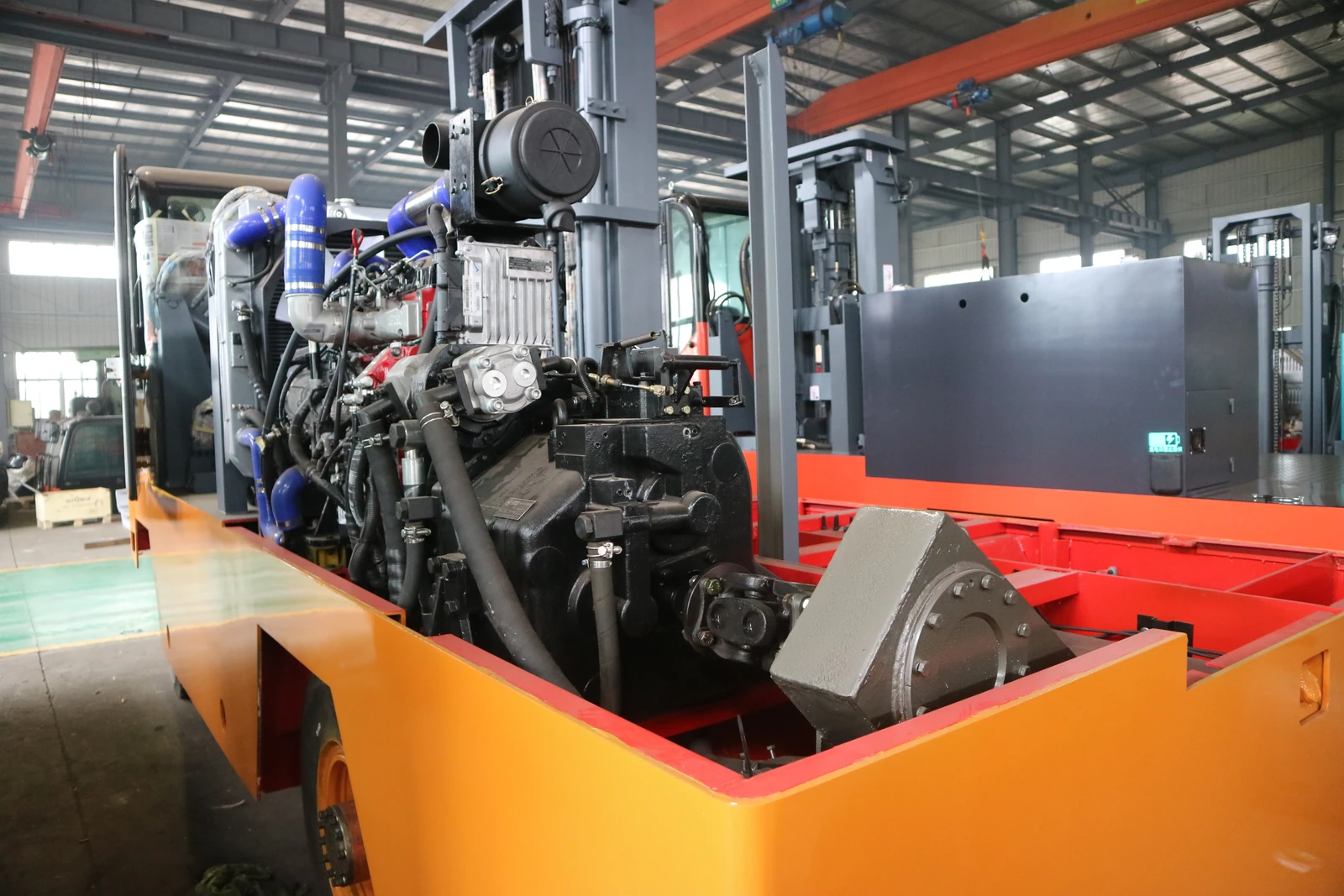
Long loads impose demanding forces on forks, mast rollers and the supporting deck. Look beyond cosmetic steel thickness: ask about mast-section construction, reinforcement around load-support points, weld inspection, hydraulic hose routing and how easily service technicians can reach filters and pumps.
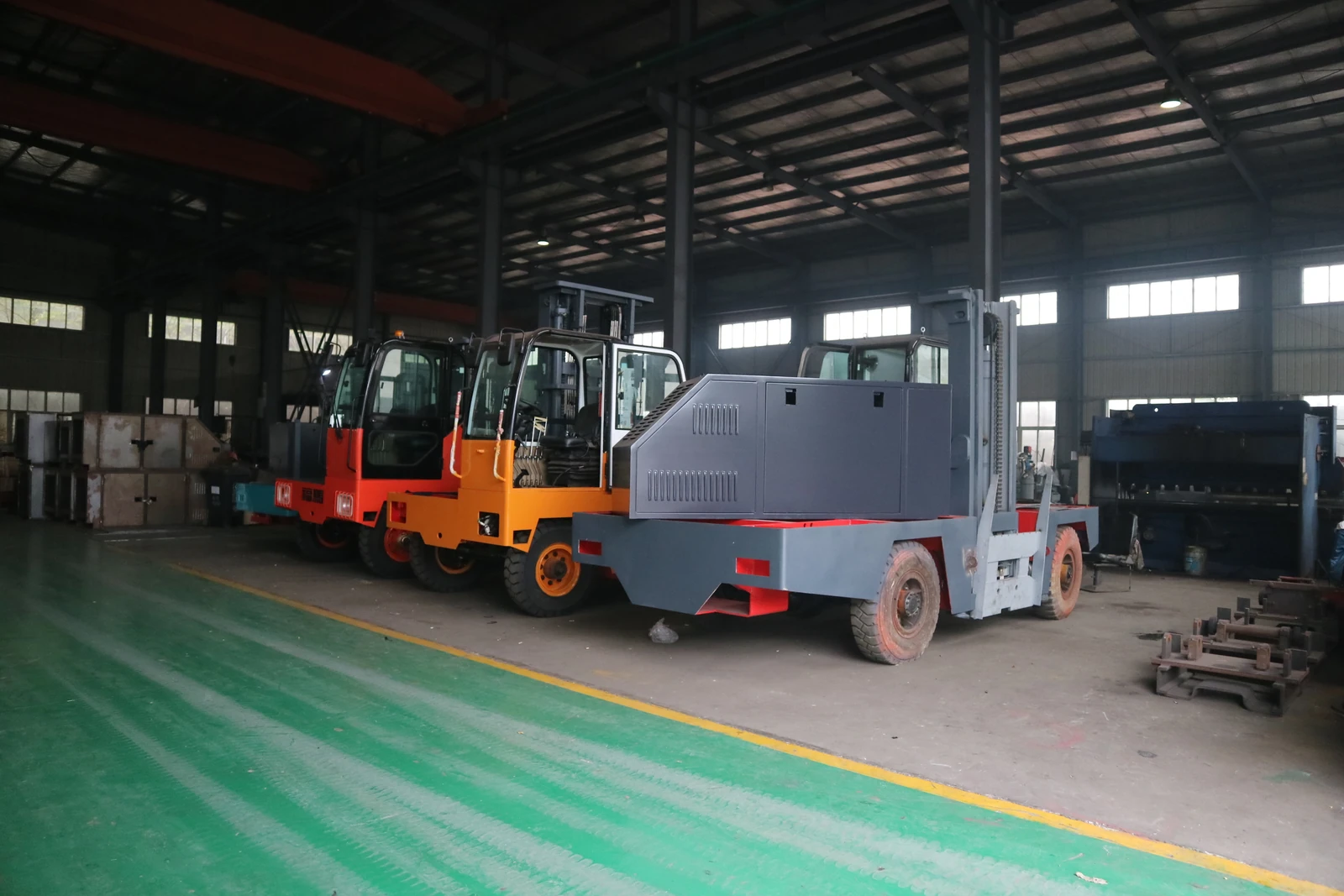
RUNTX catalog materials describe high-strength steel body construction, protected mast surfaces and service-oriented component access. Your product photos also show an enclosed operator cab, a broad carrying platform and a real engine-compartment assembly. These details give a buyer useful inspection points, but do not prove a specific fatigue life or percentage reduction in repairs. Request maintenance intervals, spare-parts lists and a pre-delivery inspection record for the actual quoted machine.
Safety inspections are not optional operating overhead. Under the U.S. OSHA powered-industrial-truck rule, vehicles must be examined at least daily before service; equipment operated around the clock must be examined after each shift. OSHA also calls for operators’ performance to be evaluated at least once every three years. Local rules may differ.
A Practical Total-Cost-of-Ownership Check
To compare a cheaper truck with a more expensive specification, estimate total cost over three to five years: purchase price, freight and import charges, fuel or electricity, routine servicing, tires, wear parts, operator training and downtime. Divide the expected total by useful operating hours or completed long-load movements. This gives a business-specific cost basis rather than an unverified manufacturer ROI promise.
Take safety-related downtime seriously. A historical U.S. National Institute for Occupational Safety and Health alert, using 1997–1998 data, reported nearly 100 forklift-related worker deaths and 20,000 serious injuries annually at that time. This is historical national context, not a current side-loader accident rate, and not evidence that one model is safer than another. Its enduring lesson is to budget for suitable equipment, training and controlled pedestrian routes—not merely the lowest quote.
Need One Side Loader, Not a Fleet?
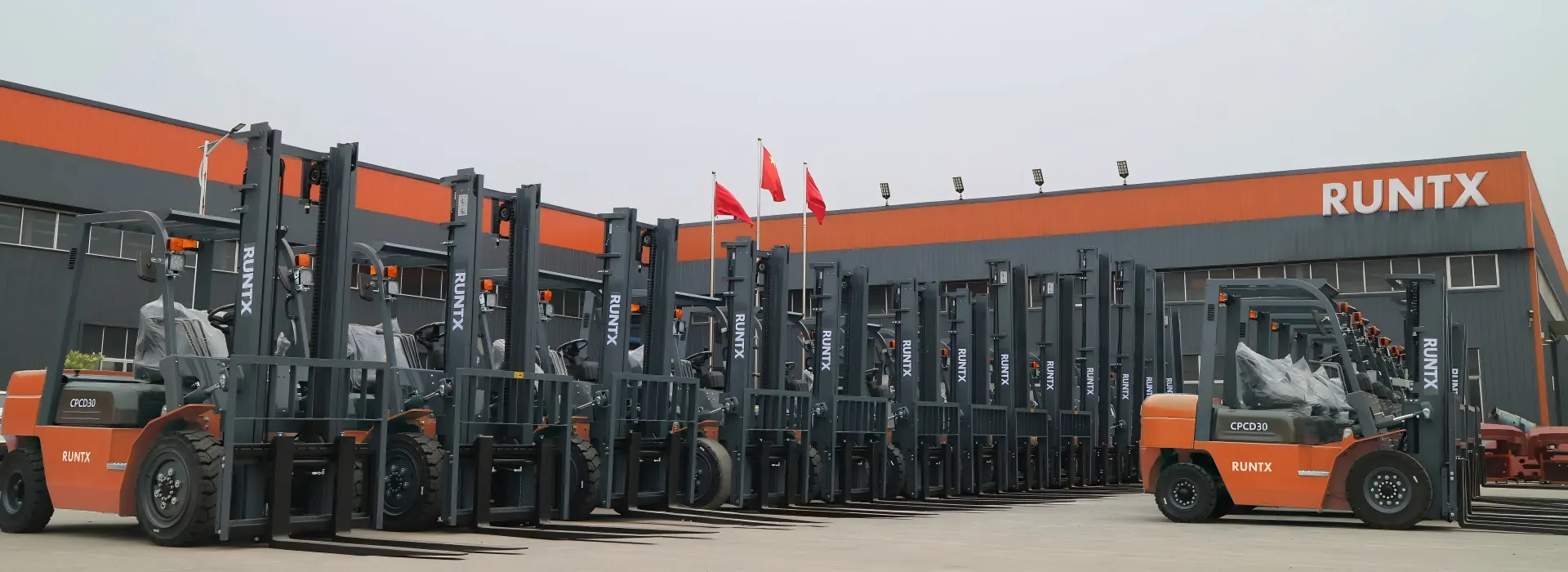
RUNTX supports 1 Unit MOQ for suitable direct orders, with factory-direct quotations, OEM/ODM options for color, branding and attachments, and shipping-document coordination. Send your load dimensions and delivery country so we can help narrow down the right model before pricing.
What to Send a Side Loader Forklift Manufacturer
A useful quotation request needs more than “6-ton sideloader price.” Include load material and packaging, maximum weight and length, center-of-gravity position, lift height, aisle and gate measurements, floor surface, daily operating hours, fuel preference and destination port. Add photographs of your storage racks if possible.
For distributors, RUNTX also discusses small-batch wholesale orders and OEM/ODM specifications, including customized colors, logos and attachments subject to engineering approval. Confirm freight, taxes, certification and import clearance for your destination.
Frequently Asked Questions
What is a side loader forklift used for?
Its principal application is lifting and carrying long materials such as timber, pipes, beams and extrusions along the side of the vehicle, subject to the approved load chart and site layout.
Is a 3-ton sideloader suitable for a small business?
Potentially. The FDS30 has a catalog-rated 3,000 kg capacity at a 600 mm load center, but suitability depends on actual bundle geometry, turning space, lift height and frequency of use.
Can a diesel side loader be used indoors?
Only where applicable regulations, air-quality controls and ventilation permit it. For enclosed facilities, assess an appropriate electric model rather than assuming diesel exhaust is acceptable.
Does RUNTX support a single unit or custom branding?
Yes. RUNTX offers 1-unit MOQ for suitable direct orders and can discuss OEM/ODM colors, branding and attachments. The final specification, price and lead time are confirmed in the quotation.
Choose a Side Loader That Fits Your Loads—and Your Budget
Compare diesel and electric configurations, request the full technical manual or ask for single-unit and small-batch factory pricing. RUNTX can also discuss international shipping coordination.
Reference note: Model figures are from the RUNTX Side Loader Forklift Catalog. Other figures are attributed in the text to EPA, OSHA and a historical NIOSH alert. Please confirm equipment configuration and current local safety requirements before purchase.