Analyzing the latest global forklift market trajectories, the surge in electrification, and how procurement managers can secure their supply chains for 2026 and beyond.
The global material handling sector is currently navigating one of its most dynamic expansion periods in recent history. Driven by the explosive growth of e-commerce, the modernization of warehouse infrastructure, and the aggressive expansion of the construction sector in emerging economies, global demand for robust lifting solutions is surging. For procurement directors, independent rental fleet owners, and international distributors, staying ahead of these macroeconomic trends is not just about industry awareness—it is about securing a reliable, cost-effective supply chain before manufacturing lead times inevitably extend.
Recent market intelligence highlights a distinct shift in how businesses procure industrial equipment. Buyers are moving away from legacy distribution models and are increasingly seeking direct partnerships with Tier-1 OEM/ODM manufacturers. This industry report decodes the latest market data and outlines the strategic implications for global fleet sourcing in 2026.
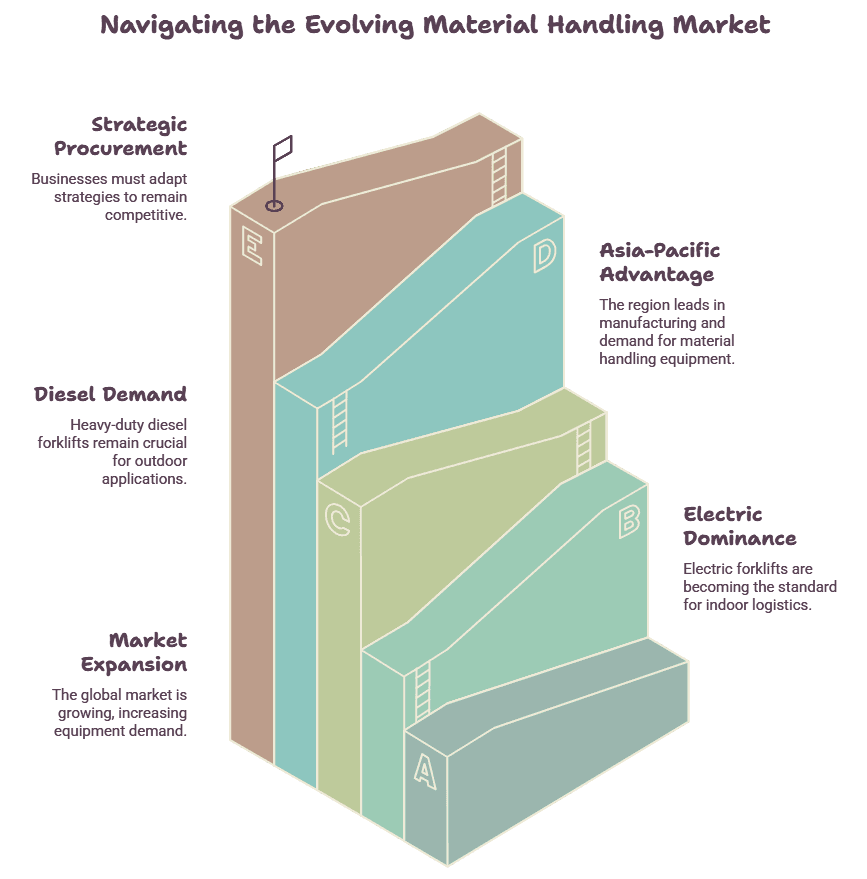
1. A Decade of Unprecedented Market Expansion
The sheer volume of material moving through global supply chains has necessitated a massive increase in equipment procurement. Warehouses are expanding vertically to maximize footprint efficiency, requiring highly agile and reliable forklifts to manage the continuous influx of goods.
*Data Source: According to the comprehensive Forklift Market Report by Fortune Business Insights, the global market size was valued at approximately USD 58.9 billion and is projected to exhibit a Compound Annual Growth Rate (CAGR) of 5.3%, reaching over USD 84.5 billion by 2030.
For independent equipment dealers and SME warehouse owners, this projected growth signals a tightening market. As major multinational logistics companies secure massive fleet orders, smaller buyers often face inflated retail prices and delayed delivery schedules from local dealerships. This environment makes it critical for buyers to bypass traditional middlemen and establish direct purchasing channels with dedicated source factories that offer flexible Minimum Order Quantities (MOQs).
2. The Unstoppable Dominance of Electric Forklifts
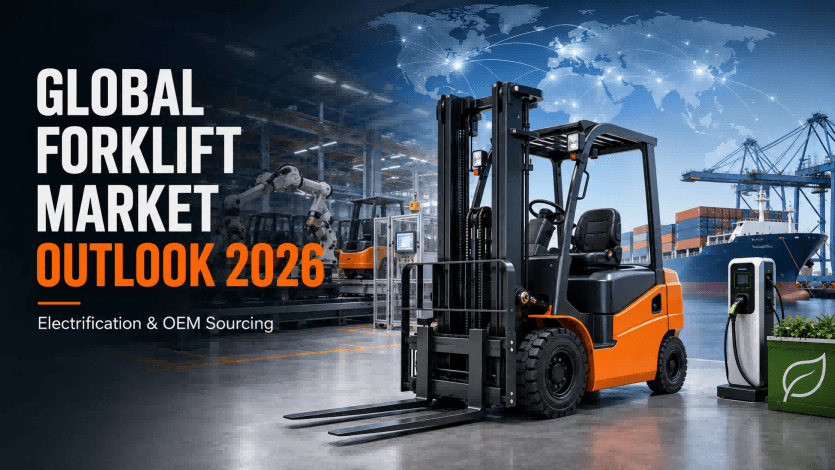
The most defining trend in the current material handling landscape is the aggressive pivot toward electrification. Strict government emissions regulations, coupled with the corporate push for carbon-neutral operations, have made internal combustion engines obsolete for indoor warehousing. However, it is the Total Cost of Ownership (TCO) that is truly driving the B2B purchasing decisions.
*Data Source: Fortune Business Insights notes that electric motor forklifts currently account for over 65% of the global market share. This dominance is heavily driven by the rapid expansion of indoor e-commerce fulfillment centers and the superior energy efficiency of lithium-ion battery technology.
Today’s advanced electric material handling equipment utilizes high-density lithium-ion power packs and precise AC drive motors. At RUNTX Machinery, our electric assembly lines are producing zero-emission units that deliver the exact same lifting torque as their diesel counterparts, but with a fraction of the daily operating costs. The elimination of diesel fuel expenses, engine oil changes, and transmission fluid maintenance allows fleet operators to achieve a significantly faster Return on Investment (ROI).
3. Sustained Demand for Heavy-Duty Diesel in Outdoor Logistics
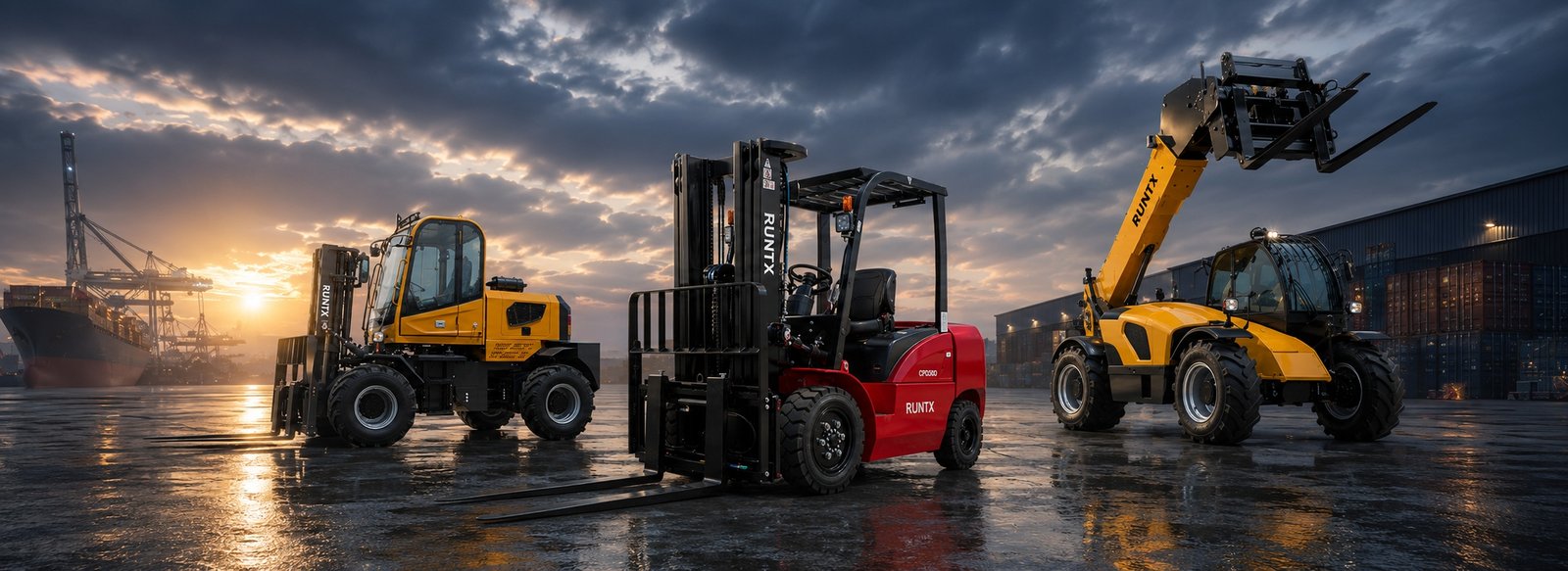
While electric models dominate the indoor warehousing sector, the report also acknowledges the sustained, critical demand for Internal Combustion Engine (ICE) forklifts in outdoor, heavy-duty applications. In sectors like lumber processing, steel manufacturing, port logistics, and rugged construction yards, battery-powered equipment still faces limitations regarding continuous, multi-shift high-load operation in extreme weather.
For these intense environments, modern heavy-duty diesel forklifts remain indispensable. Modern Chinese OEM manufacturers have significantly refined diesel architectures, integrating advanced load-sensing hydraulic systems and pre-filtration technologies. This ensures the equipment delivers relentless, fade-free power on uneven, unpaved terrain while minimizing fuel consumption and complying with global export standards.
4. The Asia-Pacific Manufacturing Advantage
Geographically, the epicenter of the material handling industry is firmly rooted in the Asia-Pacific region. Not only does this region generate the highest demand due to rapid industrialization in countries like India and Southeast Asia, but it also serves as the manufacturing powerhouse for the entire globe.
*Data Source: The Fortune Business Insights regional analysis reveals that the Asia-Pacific region dominates the global industry, accounting for more than 35% of total market revenue, cementing its position as the primary hub for both end-user demand and OEM manufacturing capabilities.
What does this mean for a procurement manager in Europe, South America, or the Middle East? It means that the most cost-effective, technologically advanced machinery originates from China. RUNTX Machinery embodies this manufacturing advantage. As a source factory, we leverage complete supply chain integration to offer premium OEM/ODM customization—from bespoke mast heights to specialized hydraulic attachments and customized corporate paint configurations.
Strategic Takeaways for 2026 Procurement
As the market continues its trajectory toward $84 billion, the gap between traditional retail buyers and strategic factory-direct sourcers will widen. To remain competitive, businesses must adapt their procurement strategies:
- Prioritize Factory-Direct Sourcing: Partnering directly with an OEM like RUNTX eliminates middleman markups, ensuring you receive highly competitive wholesale pricing even on smaller fleet orders.
- Focus on Out-of-the-Box Readiness: Ensure your manufacturing partner conducts rigorous physical stability, braking, and hydraulic testing before export, guaranteeing zero downtime upon delivery.
- Adopt a Mixed-Fleet Approach: Leverage electric models for indoor logistics to cut energy costs, while maintaining robust diesel models for heavy outdoor yard applications.
The future of material handling is highly efficient, deeply customized, and directly sourced. By aligning with a transparent, high-capacity manufacturer, your business can confidently navigate market expansions and secure the equipment necessary to drive long-term industrial growth.
Secure Your Fleet at Factory-Direct Pricing
Don’t let extended lead times and retail markups slow your business growth. RUNTX Machinery is a premier Chinese OEM source factory delivering globally compliant electric and diesel forklifts. Connect with our engineering team today.